Budez CR is a controlled-release oral capsule containing 3 mg of budesonide, a corticosteroid designed to act mainly in the lower small bowel and colon. We offer it in packs of 30, 60, 90, or 180 capsules for adults being treated for active Crohn's disease or collagenous colitis.
This tool only estimates pack size from the values you enter.
×
You need: 21 capsRecommended packs: 1 x 30 = 30 caps
Manufacturers
AstraZeneca ABDr. Falk Pharma GmbHFerring Pharmaceuticals Inc.Tillotts Pharma AG
Payment & Delivery
Package Example
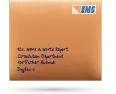
Your order is carefully packed and is dispatched within 24 hours. Here is what a typical package looks like.
Sized like a regular personal letter (approximately 24x11x0.7 cm), with no indication of what is inside.
Front View
Side View
Back View
Delivery Times
Delivery Method
Estimated delivery
Express Free for orders over £222.24
Estimated delivery to the UK: 4-7 days
Standard Free for orders over £148.16
Estimated delivery to the UK: 14-21 days
Payment Methods
Discount Coupons
New Year's Day - 1 January 2026 9%NEWYEAR9
Valentine's Day - 14 February 2026 6%VALENTINE6
St David's Day - 1 March 2026 4%DAVID4
St Patrick's Day - 17 March 2026 5%PATRICK5
St George's Day - 23 April 2026 4%GEORGE4
May Day - 1 May 2026 5%MAYDAY5
Halloween - 31 October 2026 6%HALLOWEEN6
Guy Fawkes Night - 5 November 2026 5%GUY5
Christmas Eve - 24 December 2026 9%XMASEVE9
Christmas Day - 25 December 2026 10%XMAS10
Boxing Day - 26 December 2026 10%BOXING10
New Year's Eve - 31 December 2026 8%NYE8
Brand Names
Also known as (by country):
Country
Brand Names
United Kingdom
Budenofalk
FAQ
Take unused or expired capsules to a pharmacy that offers medicine disposal or a local authorised take-back service. Do not share them with another person, and do not flush them down the toilet or pour them down a drain unless specifically instructed to do so.
Not necessarily. Budez CR contains budesonide 3 mg as the active ingredient, but capsule materials, colourings and other inactive ingredients can differ between manufacturers and branded products. Check the ingredient list on the received package before use if an excipient needs to be avoided.
Do not take it until the discrepancy has been checked. This product is an oral controlled-release capsule containing budesonide 3 mg; compare the active ingredient, strength, dosage form, package label, manufacturer, lot number and expiry date, then request help with the order if any of these do not match.
Store the capsules below 25°C, protected from light and moisture. Keep them in their tightly closed original container and out of the sight and reach of children.
During pregnancy, oral budesonide should be used only when a prescriber considers that the expected benefit outweighs the possible risk to the baby; it is not an automatic reason to stop treatment without discussing it. Budesonide passes into breast milk, but therapeutic doses of these capsules are generally considered compatible with breastfeeding, as harmful effects in a breastfed child are not expected.
These capsules are taken by mouth, usually at the same time each day, with a drink of water. Swallow the capsule whole; do not crush or chew it, as this can affect its controlled release. They may generally be taken with or without food, but the prescribed dose and treatment duration depend on the condition being treated.
Description
Note:
Images in the description are provided for informational purposes and may differ from the actual appearance of the product. Please refer to the product name, strength, active ingredients, and pharmaceutical form.
Budez CR is an oral corticosteroid capsule containing 3 mg of budesonide, formulated for controlled release so that most of the drug is delivered directly to the lower small bowel and colon rather than absorbed early in the digestive tract. It belongs to a small group of gut-targeted steroids used mainly for active Crohn's disease affecting the ileum and ascending colon, and for collagenous colitis, a type of microscopic colitis. People usually consider Budez CR when they need effective control of bowel inflammation with less of the whole-body steroid exposure associated with older corticosteroids. This article explains how it works, what a typical course looks like, and how it compares with related treatments, so you can discuss the right option with your prescriber with more confidence.
What Budez CR is and why it is used
The active ingredient, budesonide, is a synthetic corticosteroid with strong local anti-inflammatory activity in the gut wall. Unlike prednisone or prednisolone, which act throughout the whole body, budesonide is formulated and metabolised in a way that concentrates its effect where inflammation is occurring while limiting how much reaches the general circulation. Each Budez CR capsule supplies 3 mg of budesonide, and it is taken by mouth as a controlled-release capsule, the only strength and form we currently list for this product.
Because of this targeted action, budesonide capsules are generally reserved for specific segments of inflammatory bowel disease rather than being used as an all-purpose steroid. The two established uses are active, mild-to-moderate Crohn's disease involving the ileum and/or ascending colon, and collagenous colitis, one of the two forms of microscopic colitis. It is not typically the first choice for ulcerative colitis affecting the rectum and left colon, where other formulations or medicines are usually more appropriate.
Understanding the conditions it treats
Crohn's disease is a chronic inflammatory bowel disease that can affect any part of the digestive tract but often involves the last portion of the small intestine and the beginning of the colon. Flares cause symptoms such as abdominal pain, diarrhoea, weight loss, and fatigue, and untreated inflammation can lead to complications such as strictures or fistulas over time. Collagenous colitis, by contrast, causes chronic watery diarrhoea without the structural damage seen in Crohn's disease, and is diagnosed through colonic biopsies rather than visible ulceration. In both conditions, the goal of treatment is to calm active inflammation, relieve symptoms, and support day-to-day function, rather than to provide a permanent cure.
How Budez CR works
Budesonide binds to corticosteroid receptors in the cells lining the gut, switching off many of the inflammatory signals that drive swelling, excess mucus, and tissue damage in active disease. What sets it apart pharmacologically is what happens after it is absorbed: budesonide undergoes extensive first-pass metabolism in the liver, meaning a large proportion of the dose is broken down into largely inactive substances before it can circulate around the rest of the body. This is why budesonide can achieve a strong local anti-inflammatory effect in the bowel while producing comparatively fewer of the systemic corticosteroid effects associated with medicines such as prednisolone.
The controlled-release design of the capsule complements this mechanism. Each capsule contains coated pellets engineered to resist the acidic environment of the stomach and begin releasing budesonide once they reach the lower small intestine and colon, which is precisely where Crohn's disease and collagenous colitis tend to cause inflammation.
What the evidence shows
Clinical experience and published trials in gastroenterology support the use of oral controlled-release budesonide for inducing remission in active, localised Crohn's disease, with efficacy broadly comparable to conventional oral corticosteroids over a similar treatment course. The key practical advantage reported in this body of evidence is a lower rate of systemic corticosteroid side effects, reflecting budesonide's targeted release and extensive liver metabolism. In collagenous colitis, budesonide has become one of the best-studied treatments for inducing symptom remission, with many patients experiencing a reduction in stool frequency during treatment; however, relapse after stopping is common, which is one reason treatment duration and any tapering plan are usually decided by the prescribing clinician based on individual response.
Formulation and how the capsule is taken
Budez CR capsules should be swallowed whole with a glass of water, ideally in the morning, and are not meant to be chewed or crushed, since this would damage the coating responsible for controlled release and defeat the purpose of the formulation. The capsules should normally be swallowed whole with water, and the pellets must not be chewed or crushed. If swallowing is difficult, open the capsule only when the leaflet for the exact supplied product permits it or after confirming the method with a pharmacist or prescriber; any pellets taken with soft food must remain intact. Taking the capsule with or shortly after food is generally recommended, as this is consistent with how the medicine has been studied and used in practice.
General dosing principles
Dosing is individualised by a prescriber based on the condition being treated, its severity, and the patient's age and body weight, so the following reflects general public information rather than a specific recommendation for any one reader.
Indication
Typical adult starting dose
Usual course
Active Crohn's disease
9 mg (three 3 mg capsules) once daily, taken in the morning
Often up to around 8 weeks, followed by a gradual dose reduction rather than abrupt stopping
Collagenous colitis
9 mg once daily, taken in the morning
Commonly 6 to 8 weeks, with tapering guided by symptom response
Children aged 8 years and over, weighing more than 25 kg, with Crohn's disease
9 mg once daily, under specialist paediatric supervision
Determined and monitored by a paediatric gastroenterologist
Doses are not usually stopped suddenly after a longer course, because the adrenal glands can temporarily produce less of their own natural corticosteroid while budesonide is being taken. A step-down schedule, reducing to 6 mg and then 3 mg daily before stopping, is a common approach, though the exact plan should always come from the prescribing clinician.
Elimination and half-life
After swallowing, budesonide is absorbed mainly from the lower small intestine and colon, then undergoes extensive metabolism by liver enzymes, chiefly CYP3A4, into metabolites with little corticosteroid activity. Its elimination half-life from the controlled-release capsule is short, in the region of two to four hours, and the resulting inactive breakdown products are cleared mainly via the kidneys. This relatively fast clearance is part of why systemic corticosteroid effects tend to be milder than with longer-acting steroids, although the local anti-inflammatory effect in the gut lining can still last through the day with once-daily dosing.
Before you start: important safety information
Budesonide is generally not suitable for people with a known hypersensitivity to budesonide or any capsule excipient. It should be used with caution in people with significant liver impairment, since reduced liver metabolism can allow more of the drug to reach general circulation and increase the risk of systemic corticosteroid effects. Anyone with diabetes should be aware that corticosteroids, including budesonide, can raise blood glucose levels, so blood sugar monitoring may need to be closer while taking this medicine. Active or suspected infections, including tuberculosis, fungal, viral, or parasitic infections, should be discussed with a prescriber before starting, as corticosteroids can mask or worsen an underlying infection.
In pregnancy, budesonide is used only when the expected benefit to the mother is judged to outweigh any possible risk, and this decision is made individually by the treating clinician rather than being ruled in or out automatically. Current information on breastfeeding indicates that budesonide passes into breast milk in small amounts, but no effects on a breastfed infant are expected at the doses used to treat bowel disease, so many prescribers consider it compatible with breastfeeding. Budesonide is not expected to affect the ability to drive or operate machinery, though anyone who feels unusually unwell should judge their own fitness to drive rather than relying on this general statement.
Contraindications and who should avoid it
Aside from known allergy to the active ingredient or capsule components, budesonide capsules are generally avoided or used only under close specialist supervision in people with severe liver cirrhosis, since abnormal liver function changes how much of the drug escapes local action in the gut. It is not intended for long-term, continuous use as a substitute for other maintenance therapies in inflammatory bowel disease, because evidence supporting prolonged use is more limited than for short induction courses.
Interactions to be aware of
Because budesonide is broken down mainly by the liver enzyme CYP3A4, medicines and substances that strongly inhibit this enzyme can raise budesonide levels in the blood and increase the risk of systemic corticosteroid effects. This includes certain antifungal medicines such as ketoconazole and itraconazole, some antibiotics such as clarithromycin, HIV protease inhibitors such as ritonavir, and grapefruit or grapefruit juice, which are generally best avoided or discussed with a pharmacist before combining with Budez CR. Taking budesonide alongside other corticosteroids, whether oral, inhaled, or injected, can add to overall steroid exposure. Cholestyramine can reduce budesonide absorption if taken at the same time, so separating the doses is usually advised. As with other corticosteroids, combining budesonide with NSAIDs may increase the risk of stomach irritation, and it can interact with potassium-lowering diuretics and reduce the effectiveness of some vaccines, particularly live vaccines, during treatment.
Ordering Budez CR through our pharmacy
We do not require you to upload or send in a prescription before we accept an order for Budez CR, and checkout is designed to be straightforward whichever of the pack sizes we offer, 30, 60, 90, or 180 capsules, best suits your treatment plan. That said, budesonide is a corticosteroid intended for defined episodes of active bowel disease, so it works best as part of ongoing medical supervision rather than as a medicine to start or stop on your own. If you have any doubts about whether it is the right treatment, our pharmacist-supported team is available every day, by phone, online chat, or email, to help you think through your questions before you order.
Side effects and when to seek help
Most people taking budesonide for a defined course tolerate it reasonably well, particularly compared with higher-dose systemic corticosteroids, but no corticosteroid is free of possible side effects. It helps to know in advance which effects are simply worth mentioning at a routine check-up and which ones mean you should get medical attention sooner rather than later.
Alongside the effects shown above, longer courses or higher cumulative exposure can occasionally bring on more typical corticosteroid features, such as increased appetite, fluid retention, or changes in mood, which are worth raising with your prescriber at a review rather than waiting for them to resolve on their own.
Overdose and accidental extra doses
Taking one extra dose by accident is unlikely to cause serious harm, but a significant overdose of budesonide could increase the risk of corticosteroid-related effects such as marked fluid retention, high blood pressure, or disturbed blood sugar. If you or someone else has taken substantially more than the prescribed amount, or swallowed a child's dose accidentally, contact your GP, call NHS 111 for advice, or, if there are severe symptoms such as fainting, chest pain, or breathing difficulty, call 999 or go to the nearest accident and emergency department. There is no specific antidote to budesonide; treatment focuses on monitoring and managing symptoms.
How to store Budez CR
Keep Budez CR capsules in their original container, tightly closed, below 25°C, and away from direct light and damp conditions such as a bathroom cabinet. Storing the capsules this way helps protect the controlled-release coating so the medicine continues to work as intended. As with any prescription medicine, keep it out of the sight and reach of children, and do not use capsules beyond the expiry date printed on the packaging.
Weighing the benefits against the limitations
The main appeal of Budez CR lies in combining meaningful anti-inflammatory activity in the lower small bowel and colon with a lower burden of whole-body corticosteroid effects than older oral steroids typically produce over a comparable course. This makes it an attractive option for people who need to induce remission in localised Crohn's disease or collagenous colitis without committing to the broader side-effect profile of high-dose prednisolone. The trade-off is that its targeted action means it is not usually effective for disease patterns outside its studied indications, such as extensive left-sided ulcerative colitis, and it is generally intended for defined treatment courses rather than indefinite daily use, since long-term data supporting continuous therapy are more limited. Response also varies between individuals, and some people will still need a switch to, or addition of, another treatment if symptoms do not settle adequately.
Generic and alternative options
Budesonide itself is the generic name shared by several branded products, so Budez CR is one way of accessing the same active ingredient and controlled-release delivery principle used in other budesonide capsules on the market. For people whose disease pattern or response calls for a different approach, systemic corticosteroids such as Prednisolone act throughout the body rather than being concentrated in the gut, and may be considered when a broader or more rapid anti-inflammatory effect is needed, at the cost of a higher likelihood of typical steroid side effects with longer use. Mesalamine-based medicines work through a different, non-steroid mechanism and are more commonly used for ulcerative colitis than for the specific indications covered by budesonide capsules, so they are not a direct substitute in most cases. Choosing between these options is a clinical decision that depends on which part of the bowel is affected, how active the disease is, and how a person has responded to treatment before, so it is best made together with the prescriber managing your inflammatory bowel disease.
I'm ordering Budez CR before a course of treatment later this year. Will there be enough shelf life left when it arrives?
A
Answered by Support team
The exact expiry date cannot be guaranteed in advance and should be checked on the package you receive. Please make sure the labelled expiry date is suitable for when you expect to use the capsules.
Q
Asked by Oliver, Brighton, United Kingdom
My order to Brighton has been dispatched. Does that mean it will be delivered tomorrow?
A
Answered by Support team
Not necessarily: dispatch means the parcel has left for delivery, not that it will arrive the next day. Express delivery is usually 4-7 days and includes tracking, while standard delivery is usually 14-21 days and normally has no tracking updates.
Q
Asked by Priya, Leeds, United Kingdom
Before I place my order, how can I tell how many Budez CR capsules are in the pack?
A
Answered by Support team
Select the pack quantity shown with the product before adding it to your basket. The available options are 30, 60, 90 and 180 capsules.
Q
Asked by James, Stoke-on-Trent, United Kingdom
I usually have grapefruit juice with breakfast. Is that alright while I'm taking budesonide controlled-release capsules?
Avoid grapefruit and grapefruit juice during treatment. They can inhibit the enzyme that breaks down budesonide, increasing its level in the body and the likelihood of corticosteroid side effects.
Product specifications
Active ingredient
Budesonide
Drug class
Corticosteroid
Dosage form
Controlled-release capsule
Available strengths
3 mg
Route
Oral
Storage
Store below 25°C, protected from light and moisture, and keep the capsules in their tightly closed original container.
ATC code
A07EA06
Regulatory information
UK authorisationBudesonide is approved for human medicinal use in the United Kingdom.
Legal classificationControlled-release capsules containing budesonide are classified as prescription-only medicines (POM).