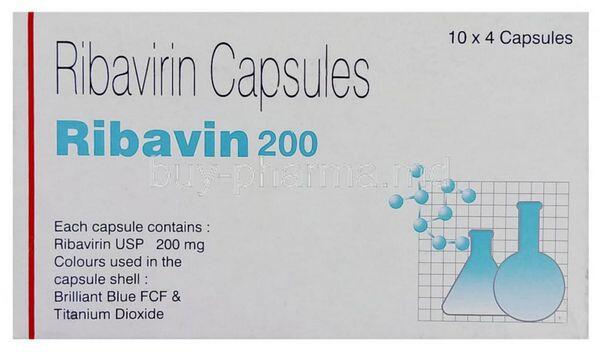
In the UK, ribavirin is indicated for carefully selected hospitalised infants and young children with severe lower respiratory tract infections caused by respiratory syncytial virus (RSV). In addition, ribavirin (600 to 1800 mg/day for 10 to 14 days) has shown effectiveness in acute and chronic hepatitis, genital herpes, measles and Lassa fever.
Ribavirin has antiviral activity in vitro against respiratory syncytial virus, influenza virus and herpes simplex virus.
Ribavirin's antiviral mechanism of action is related to changes in cellular nucleotide pools and inhibition of viral messenger RNA synthesis. Inside cells, it is phosphorylated to mono-, di- and triphosphate derivatives by host cell enzymes. In both uninfected and RSV-infected cells, the main derivative (>80%) is the triphosphate, which has an intracellular elimination t1/2 of less than 2 hours.
Ribavirin monophosphate competitively inhibits cellular inosine-5'-phosphate dehydrogenase and interferes with the synthesis of guanosine triphosphate (GTP) and therefore nucleic acid synthesis in general. Ribavirin triphosphate also competitively inhibits the GTP-dependent 5'-capping of viral messenger RNA and, in particular, influenza virus transcriptase activity. Ribavirin appears to work at several sites, and some of these effects (for example, inhibition of GTP synthesis) may enhance others (for example, inhibition of GTP-dependent enzymes).
Ribavirin, which is teratogenic, gonadotoxic, embryotoxic and oncogenic, has caused malformations of the skull, palate, eye, jaw, skeleton and GI tract, and is therefore contraindicated in women who are pregnant or planning to become pregnant during exposure to the drug.
Aerosolised ribavirin has generally been well tolerated, but it may cause mild conjunctival irritation, rash, transient wheezing and occasional reversible worsening of pulmonary function. When it is used with mechanical ventilation, equipment modifications and frequent monitoring are needed to prevent ventilator valves and tubing becoming blocked with ribavirin.
Systemic ribavirin causes dose-related anaemia due to extravascular haemolysis and dose-related bone marrow suppression. Reversible increases in serum bilirubin, serum iron and uric acid concentrations occur during short-term oral use. Bolus intravenous infusion may cause rigors. In patients with HIV, long-term oral therapy is also associated with dose-related lymphopenia and gastrointestinal and CNS symptoms, including headache, lethargy, insomnia and mood changes.
Ribavirin: Organs and Systems
Haematological
Ribavirin accumulates in erythrocytes, resulting in haemolysis by an unknown mechanism, perhaps related to oxidative damage to the erythrocyte membrane. Time-dependent and dose-dependent haemolytic anaemia (eventually associated with hyperbilirubinaemia and a high reticulocyte count) is the only major toxic effect associated with oral or intravenous ribavirin and is reversible on withdrawal. Haemoglobin concentrations fell below 10.0 g/dl in 9% of patients with hepatitis C treated with ribavirin and interferon alfa.
In 140 patients with Nipah virus infection, there was no difference in the incidence of side effects between those who chose ribavirin treatment and those who refused it. Dosing was based on recommendations intended to achieve approximately the same concentrations as those seen with 100-1200 mg/day in the treatment of hepatitis C. Anaemia occurred in 37% of the ribavirin-treated patients and in the same number of controls, suggesting that ribavirin was equally well tolerated in the two groups.
In patients taking ribavirin plus interferon alfa-2b, the average fall in haemoglobin is 2-3 g/dl. Of 57 patients taking ribavirin 800 mg/day, 28 were randomised to a high dose of peginterferon alfa-2b once a week (3 micrograms/kg for 1 week, 1.5 micrograms/kg for 3 weeks and 1.0 microgram/kg for 44 weeks) and 27 patients were randomised to receive a low dose (0.5 micrograms/kg) for 48 weeks; three patients required lower doses of ribavirin because of anaemia.
In a randomised controlled trial of high-dose interferon alfa-2b plus oral ribavirin for 6 or 12 months in 50 patients with chronic hepatitis C, the sequential effects of treatment on haemoglobin, leukocytes and platelets were recorded. Haemoglobin fell, and the lowest concentrations were recorded after 6 months of treatment in both groups. All haematological measurements returned to normal after treatment ended.
Detailed in vitro studies of the effects of ribavirin on erythrocyte adenosine and adenosine triphosphate content and on the hexose monophosphate shunt have been carried out. Adenosine and adenosine triphosphate concentrations were significantly reduced and the hexose monophosphate shunt increased, suggesting erythrocyte susceptibility to oxidation. In vivo, ribavirin, alone or in combination with interferon, was associated with significant reductions in haemoglobin concentrations and a marked increase in absolute reticulocyte counts. Erythrocyte Na/K pump activity was significantly reduced, whereas K/Cl cotransport and its dithiothreitol-sensitive fraction and malondialdehyde and methaemoglobin concentrations increased significantly. Ribavirin-treated patients showed an increase in aggregated band 3, which was associated with significantly increased binding of autologous antibodies and complement C3 fragments, suggesting erythrophagocytic removal by the reticuloendothelial system.
A low pretreatment platelet count, the dose of interferon alfa and the haptoglobin phenotype are risk factors for ribavirin-induced anaemia, and the fall in haemoglobin is independent of dose within the therapeutic range. In five patients with chronic hepatitis C on haemodialysis who received subcutaneous interferon alfa-2b and oral ribavirin for 40 weeks, the dose of ribavirin was titrated according to haemoglobin, with bone marrow support from erythropoietin. There was significant bone marrow toxicity in all five. A dose of 200 mg/day produced a steady-state AUC comparable to that obtained with 1000-1200 mg/day in historical controls with normal renal function. The more severe anaemia may have been due to chronic renal insufficiency in addition to the prolonged effects of ribavirin.
Treatment of ribavirin-induced haemolytic anaemia with recombinant human erythropoietin has been described in 13 patients. The haemoglobin concentration increased from a nadir of 10.2 g/dl to a median of 11.5 g/dl and ribavirin treatment did not have to be withdrawn.
Liver
As part of a multicentre, randomised, double-blind, placebo-controlled trial of ribavirin in 59 patients with hepatitis C virus infection, liver biopsies were studied for iron deposition. Increased total iron deposition, mainly in hepatocytes, occurred during a 9-month course of ribavirin. The deposition had no apparent effect on the biochemical or histological response to ribavirin therapy.
Skin
Photosensitivity after ribavirin has been described. A well-documented photoallergic reaction in a woman taking both ribavirin and interferon alfa provided evidence that ribavirin is a potential photosensitiser for UVB, a problem that may become increasingly relevant in patients with chronic hepatitis C taking combination therapy with interferon alfa and ribavirin for 6-12 months.
Transient acantholytic dermatosis (Grover's disease) was first described by Grover in 1970 as an itchy, self-limiting, papular or papulovesicular eruption, mainly affecting the trunk of white middle-aged men. The histopathological hallmark is suprabasal acantholysis at different levels of the epidermis. Its origin is uncertain; most cases are linked to sunlight, heat or sweating. Grover's disease has been attributed to ribavirin.
A 55-year-old man with chronic hepatitis C presented with an itchy papular eruption on the trunk lasting 2 weeks. He had multiple erythematous, excoriated papules on the neck, trunk, upper arms and thighs. The lesions appeared 2 weeks after combination therapy with oral ribavirin and subcutaneous interferon alfa-2b. He had previously been treated with interferon alfa alone (at the same dose). After ribavirin was withdrawn, the lesions gradually faded, but they returned 1 week after it was reintroduced.
Ribavirin: Side Effects
The synthetic triazole nucleoside ribavirin (1-beta-D-ribofuranosyl-1,2,4-triazole-3-carboxamide, tribavirin, virazole) has a broad spectrum of antiviral activity, including against DNA as well as RNA viruses. Ribavirin closely resembles guanosine and is converted inside cells to mono-, di- and triphosphate derivatives, which inhibit virus-induced enzymes involved in viral nucleic acid synthesis by mechanisms that are not fully understood. Of the DNA viruses, ribavirin is active against herpes simplex virus and hepatitis B virus; among the RNA viruses, good activity has been observed against hepatitis C virus, orthomyxoviruses, paramyxoviruses, arenaviruses and bunyaviruses. Although active against HIV in vitro and in vivo, ribavirin is not widely used to treat HIV infection. So far, drug resistance has not been described.
Oral ribavirin has been used successfully in the treatment of Lassa fever, Crimean Congo haemorrhagic fever and, in combination with interferon alfa, hepatitis C infection. Several publications have suggested that combining interferon alfa with ribavirin is more effective than interferon alfa alone. There is also evidence that retreatment with the combination may succeed in controlling or eliminating viraemia when monotherapy has failed. Although the combination may increase some of the side effects normally associated with interferon alfa (dyspnoea, pharyngitis, pruritus, nausea, insomnia and anorexia), oral ribavirin clearly adds to the overall toxicity of the combination by causing haemolytic anaemia, which is usually mild.
Ribavirin is well absorbed when taken by mouth, but it can also be given as an aerosol for the treatment of respiratory syncytial virus (RSV) infections in immunocompromised patients, in those with cardiopulmonary abnormalities, or in infants receiving mechanical ventilation.
The side effects and other safety aspects of interferon and ribavirin in the treatment of hepatitis C infection have been reviewed.
Comparative studies
Two large, randomised, placebo-controlled comparisons of interferon alfa-2b alone with interferon alfa-2b plus ribavirin have been published. In the initial treatment of chronic hepatitis C, 912 patients were randomly assigned to receive standard-dose interferon alfa-2b alone or in combination with ribavirin (1000 or 1200 mg/day by mouth, depending on body weight) for 24 or 48 weeks. As expected, dose reduction because of anaemia was necessary in 8% of patients taking the combination therapy and in none of those treated with interferon alone. Dyspnoea, pharyngitis, pruritus, rash, nausea, insomnia and anorexia were reported more often during combination therapy with ribavirin. In patients whose chronic hepatitis had relapsed after therapy with interferon alfa-2b alone, 345 patients were randomised to receive standard-dose interferon alfa-2b alone or in combination with ribavirin (1000 or 1200 mg/day by mouth, depending on body weight) for 6 months. Dose reduction because of anaemia was required in 12/173 patients assigned to combination therapy and in none assigned to interferon alone. As in the initial therapy study, dyspnoea, nausea and rash were significantly more common in patients treated with the combination of interferon and ribavirin.
Ribavirin 15 mg/kg/day plus interferon alfa in 12 teenagers has been compared with interferon alone in 10. There was no difference in dropout rate, but viral clearance was achieved in 50% of the patients who took the combination treatment versus 30% of those who took monotherapy. Side effects were similar in the two groups. There was mild haemolytic anaemia at the end of the first month in most of the children who took ribavirin, but four had moderate to severe haemolysis and two had to stop taking ribavirin. Severe haemolysis in a patient with thalassaemia led to ribavirin being withdrawn within 3 months.
Ribavirin: Organs and Systems
Second-Generation Effects
Teratogenicity
Ribavirin is teratogenic and embryotoxic in laboratory animals and should not be given to pregnant women. Concerns have been raised about the safety of people in the same room as patients being treated with aerosolised ribavirin, particularly women of child-bearing age. However, no ribavirin was detected in the urine, plasma or erythrocytes of 19 nurses exposed to ribavirin administered via ventilator, oxygen tent or oxygen hood over 3 days.
Drug-Drug Interactions
Didanosine
Multisystem organ dysfunction and lactic acidaemia occurred in two of 15 patients with HIV and hepatitis C infections who received interferon alfa, didanosine and ribavirin. Co-administration of didanosine with ribavirin can lead to increased toxicity secondary to raised intracellular concentrations of phosphorylated didanosine (ddA-TP). The evidence therefore suggests that the combination of didanosine and ribavirin increases the risk of lactic acidosis.
Warfarin
An interaction between warfarin and ribavirin has been reported.
In a 61-year-old white man with chronic hepatitis C who took interferon plus ribavirin, the dose of warfarin had to be increased by about 40% (from 45 to 63 mg/week) in order to maintain the desired degree of anticoagulation. This effect was reproduced on rechallenge with ribavirin.
The mechanism of this suspected interaction is not known. For example, ribavirin is cleared by intracellular phosphorylation and its metabolites by the kidneys, while warfarin is cleared by cytochrome P450 isozymes in the liver; warfarin is highly protein bound, whereas ribavirin is not. However, an effect on warfarin absorption or its action on clotting factor synthesis is possible.