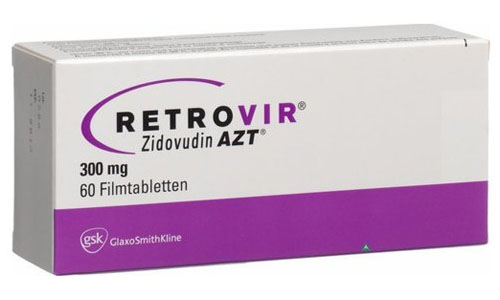
What Retrovir is and what it is used for
Retrovir is used to treat HIV (human immunodeficiency virus) infection.
The active ingredient in Retrovir is zidovudine. Retrovir is a type of antiretroviral medicine. It belongs to a group of medicines called nucleoside analogue reverse transcriptase inhibitors (NRTIs).
Retrovir does not cure HIV infection, but it reduces the amount of virus in your body and helps keep it at a low level. Retrovir also increases the CD4 cell count in your blood. CD4 cells are a type of white blood cell that help your body fight infection.
Retrovir is used together with other medicines ('combination therapy') to treat HIV in adults and children. To keep your HIV infection under control and stop your illness getting worse, you must keep taking all your medicines.
If you're pregnant, your doctor may want you to take Retrovir to help prevent you passing HIV on to your unborn baby. After birth, your baby may also be given Retrovir to help prevent HIV infection.
HIV infection is spread through sexual contact with someone who has the infection or through infected blood (for example, by sharing needles).
Before you take Retrovir
Don't take Retrovir:
- if you're allergic (hypersensitive) to zidovudine or any of the other ingredients in Retrovir
- if you have a very low white blood cell count (neutropenia) or a very low red blood cell count (anaemia).
Retrovir for newborn babies
Retrovir must not be given to some newborn babies with liver problems, including:
- some cases of hyperbilirubinaemia (increased levels in the blood of a substance called bilirubin which may make the skin look yellow)
- other problems that cause high levels of liver enzymes in the blood.
Take special care with Retrovir
Some people taking Retrovir or combination therapy for HIV are more at risk of serious side effects. You need to be aware of the extra risks:
- if you have ever had liver disease (including hepatitis B or C)
- if you're seriously overweight (especially if you're a woman)
- if you have diabetes and use insulin.
Talk to your doctor if any of these apply to you. You may need extra check-ups, including blood tests, while you're taking this medicine. See Section 4 for more information.
Look out for important symptoms
Some people taking medicines for HIV infection develop other conditions, which can be serious. You need to know which important signs and symptoms to watch out for while you're taking Retrovir. If you have any questions about this information or the advice given:
Other medicines and Retrovir
Tell your doctor or pharmacist if you're taking any other medicines, or have taken any recently, including herbal remedies or medicines you bought without a prescription.
Remember to tell your doctor or pharmacist if you start taking a new medicine while you're taking Retrovir.
Don't take these medicines with Retrovir:
- stavudine, used to treat HIV infection
- rifampicin, which is an antibiotic.
Some medicines can make side effects more likely, or make them worse.
These include:
- sodium valproate, used to treat epilepsy
- aciclovir, ganciclovir or interferon, used to treat viral infections
- pyrimethamine, used to treat malaria and other parasitic infections
- dapsone, used to prevent pneumonia and treat skin infections
- fluconazole or flucytosine, used to treat fungal infections such as Candida
- pentamidine or atovaquone, used to treat parasitic infections such as PCP
- amphotericin or co-trimoxazole, used to treat fungal and bacterial infections
- probenecid, used to treat gout and
- similar conditions, and given with some antibiotics to make them more effective
- methadone, used as a heroin substitute
- vincristine, vinblastine or doxorubicin,
- used to treat cancer.
Tell your doctor if you're taking any of these.
Some medicines interact with Retrovir. These include:
- clarithromycin, which is an antibiotic
- phenytoin, used to treat epilepsy.
Tell your doctor if you're taking clarithromycin or phenytoin. Your doctor may need to monitor you while you're taking Retrovir.
Pregnancy
If you are pregnant, if you become pregnant, or if you're planning to become pregnant:
- Talk to your doctor about the risks and benefits of taking Retrovir.
If pregnant women who are HIV-positive take Retrovir, they are less likely to pass HIV on to their unborn babies.
Retrovir and similar medicines may cause side effects in unborn babies; if they do, these effects may not show up until after the baby is born. Even so, the benefit of protecting your baby from HIV is greater than the risk of side effects.
If you've taken Retrovir while you were pregnant, your baby may be given extra check-ups (which may include blood tests) to make sure they are developing normally.
Breastfeeding
Women who are HIV-positive must not breastfeed, because HIV infection can be passed on to the baby in breast milk.
If you're breastfeeding, or thinking about breastfeeding:
- Talk to your doctor immediately.
Driving and using machines
Retrovir can make you feel dizzy and cause other side effects that make you less alert.
Don't drive or use machines unless you're feeling well.
Important information about some ingredients of Retrovir
Retrovir oral solution contains:
- sodium benzoate, a preservative that can cause mild irritation of the skin, eyes and lining of the mouth, throat and gut.
- glycerol, which may cause headache, stomach upset and diarrhoea.
- maltitol, a sugar. If you have an intolerance to some sugars, contact your doctor before taking Retrovir. Maltitol may also have a mild laxative effect. It contains 2.3 kilocalories per gram.
You will need regular blood tests
For as long as you're taking Retrovir, your doctor will arrange regular blood tests to check for side effects. There's more information about these side effects in Section 4 of this leaflet.
Stay in regular contact with your doctor
Retrovir helps control your condition, but it is not a cure for HIV infection. You need to keep taking it every day to stop your illness getting worse. You may still develop other infections and illnesses linked to HIV infection.
Keep in touch with your doctor, and don't stop taking Retrovir without your doctor's advice.
Protect other people
Retrovir will not stop you passing HIV on to other people through sex or blood transfer. To help protect other people from becoming infected with HIV:
Use a condom when you have oral or penetrative sex.
Don't risk blood transfer - for example, don't share needles.
How to take Retrovir
Always take Retrovir exactly as your doctor has told you to. Check with your doctor or pharmacist if you're not sure.
How much Retrovir will you need to take?
Adults and adolescents weighing at least 30 kg:
The usual dose of Retrovir is 25 ml (250 mg) or 30 ml (300 mg) twice a day. Take each dose 12 hours apart.
Children weighing at least 9 kg and less than 30 kg:
Your doctor will decide the right dose of Retrovir for your child, depending on your child's size. Your child can also take Retrovir 100 mg capsules.
The usual dose is 9 mg for each kg of body weight twice a day and will be no more than 30 ml (300 mg) twice a day.
Children weighing at least 4 kg and less than 9 kg:
Your doctor will decide the right dose of Retrovir for your child, depending on your child's size.
The usual dose is 12 mg for each kg of body weight twice a day. If your baby cannot take medicines by mouth, your doctor may decide to give your baby Retrovir by injection instead.
Pregnancy, childbirth and newborn babies:
You should not normally take Retrovir during the first 14 weeks of pregnancy. After week 14, the usual dose is 50 ml (500 mg) each day until you go into labour. During labour and birth, your doctor may give you Retrovir by injection until your baby's umbilical cord has been clamped. Your newborn baby may also be given Retrovir to help prevent HIV infection.
People with kidney or liver problems:
If you have severe kidney or liver problems, you may be given a lower dose of Retrovir, depending on how well your kidneys or liver are working. Follow your doctor's advice.
Step by step instructions
Use the oral dosing syringe supplied with the pack to measure your dose accurately.
- Remove the bottle cap and keep it somewhere safe.
- Push the plastic adaptor into the neck of the bottle, while holding the bottle firmly.
- Insert the syringe firmly into the adaptor.
- Turn the bottle upside down.
- Pull out the syringe plunger until the first part of your full dose has been drawn up.
- Turn the bottle the right way up and remove the syringe from the adaptor.
- Put the syringe into your mouth, placing the tip against the inside of your cheek. Slowly push the plunger in, allowing time to swallow. Don't push too hard and squirt the liquid into the back of your throat or you may choke.
- Repeat steps 3 to 7 in the same way until you have taken the whole dose.
- Do not leave the syringe in the bottle.
- Remove the syringe and adaptor and wash them thoroughly in clean water. Let them dry completely before using them again.
- Close the bottle tightly with the cap.
If you take too much Retrovir
If you accidentally take too much Retrovir, it is unlikely to cause serious problems. The most common effects of taking too much Retrovir are tiredness, headaches and being sick (vomiting). If you feel unwell:
- Ask your doctor or pharmacist for advice.
If you forget to take Retrovir
If you forget to take a dose, don't worry. You can take your next dose as soon as you remember, but not within two hours of your next dose. If you remember within two hours of your next dose, just skip the missed dose and take your next dose at the usual time. Then continue your treatment as before.
Don't take a double dose to make up for a missed dose.
Don't stop taking Retrovir without advice
Take Retrovir for as long as your doctor recommends. Don't stop unless your doctor tells you to.
Possible side effects
Like all medicines, Retrovir can cause side effects, although not everyone gets them. Some side effects may show up in blood tests and may not appear until 4 to 6 weeks after you start taking Retrovir. If you get any of these effects, and they are severe, your doctor may advise you to stop taking Retrovir.
As well as the effects listed below, other conditions can develop during combination therapy for HIV.
It is important to read the information in 'Other possible side effects of combination therapy for HIV'.
Very common side effects
These may affect more than 1 in 10 people taking Retrovir:
- headaches
- feeling sick (nausea).
Common side effects
These may affect up to 1 in 10 people taking Retrovir:
- being sick (vomiting)
- diarrhoea
- stomach pains
- feeling dizzy
- aching muscles.
Common side effects that may show up in your blood tests are:
- a low red blood cell count (anaemia) or low white blood cell count (neutropenia or leucopenia)
- an increase in the level of liver enzymes
- an increased amount of bilirubin in the blood (a substance produced in the liver) which may make your skin look yellow.
Uncommon side effects
These may affect up to 1 in 100 people taking Retrovir:
- skin rash (red, raised or itchy skin)
- feeling breathless
- fever (high temperature)
- general aches and pains
- wind (flatulence)
- weakness.
Uncommon side effects that may show up in your blood tests are:
- a decrease in the number of cells involved in blood clotting (thrombocytopenia), or in all kinds of blood cells (pancytopenia).
Rare side effects
These may affect up to 1 in 1,000 people taking Retrovir:
- liver disorders, such as jaundice, enlarged liver or fatty liver
- inflammation of the pancreas
- chest pain; disease of the heart muscle
- fits (convulsions)
- feeling depressed or anxious; not being able to sleep (insomnia); not being able to concentrate; feeling drowsy
- indigestion; loss of appetite; taste disturbance
- changes in the colour of your nails, your skin, or the skin inside your mouth
- a flu-like feeling - chills, sweating and cough
- tingly feelings in the skin (pins and needles)
- passing urine more often
- enlarged breasts in men.
A rare side effect that may show up in your blood tests is:
- a decrease in the number of a type of red blood cell (pure red cell aplasia).
Very rare side effects
A very rare side effect that may affect up to 1 in 10,000 people taking Retrovir, and may show up in blood tests is:
- a failure of the bone marrow to produce new blood cells (aplastic anaemia).
If you get side effects
- Tell your doctor or pharmacist if any of the side effects become severe or troublesome, or if you notice any side effects not listed in this leaflet.
Other possible side effects of combination therapy for HIV
Some other conditions may develop during HIV treatment.
Old infections may flare up
People with advanced HIV infection (acquired immunodeficiency syndrome (AIDS)) have weak immune systems and are more likely to develop serious infections (opportunistic infections). When these people start treatment, they may find that old, hidden infections flare up, causing signs and symptoms of inflammation. These symptoms are probably caused by the body's immune system becoming stronger, so that the body starts to fight these infections.
If you get any symptoms of infection while you're taking Retrovir:
- Tell your doctor immediately. Don't take other medicines for the infection without your doctor's advice.
Your body shape may change
People taking combination therapy for HIV may find that their body shape changes because of changes in fat distribution:
- Fat may be lost from the legs, arms or face.
- Extra fat may build up around the tummy (abdomen), or on the breasts or internal organs.
- Fatty lumps (sometimes called buffalo hump) may appear on the back of the neck.
It is not yet known what causes these changes, or whether they have any long-term effects on your health. If you notice changes in your body shape:
Lactic acidosis is a rare but serious side effect
Some people taking Retrovir, or other medicines like it (NRTIs), develop a condition called lactic acidosis, together with an enlarged liver. Lactic acidosis is caused by a build-up of lactic acid in the body. It is rare; if it happens, it usually develops after a few months of treatment. It can be life-threatening, causing failure of internal organs.
Lactic acidosis is more likely to develop in people who have liver disease, or in obese (very overweight) people, especially women.
Signs of lactic acidosis include:
- deep, rapid, difficult breathing
- drowsiness
- numbness or weakness in the limbs
- feeling sick (nausea), being sick (vomiting)
- stomach pain.
During your treatment, your doctor will monitor you for signs of lactic acidosis. If you have any of the symptoms listed above, or any other symptoms that worry you:
See your doctor as soon as possible.
You may have problems with your bones
Some people taking combination therapy for HIV develop a condition called osteonecrosis. With this condition, parts of the bone tissue die because of reduced blood supply to the bone.
People may be more likely to get this condition:
- if they have been taking combination therapy for a long time
- if they are also taking anti-inflammatory medicines called corticosteroids
- if they drink alcohol
- if their immune systems are very weak
- if they are overweight.
Signs of osteonecrosis include:
- stiffness in the joints
- aches and pains (especially in the hip, knee or shoulder)
- difficulty moving.
If you notice any of these symptoms: Tell your doctor.
Other effects may show up in tests
Combination therapy for HIV can also cause:
- increased levels of lactic acid in the blood, which on rare occasions can lead to lactic acidosis
- increased levels of sugar, fatty acids (triglycerides) and cholesterol in the blood
- resistance to insulin (so if you have diabetes, you may have to change your insulin dose to control your blood sugar).
These effects may show up in the blood tests you'll have while you're taking Retrovir.
How to store Retrovir
Keep Retrovir out of the sight and reach of children.
Throw away the bottle 1 month after first opening it. If you have any unwanted Retrovir, don't dispose of it in wastewater or household rubbish. Take it back to your pharmacist, who will dispose of it in a way that will not harm the environment.