What Is Bactrim?
Bactrim (sulfamethoxazole/trimethoprim) is a combination antibiotic containing sulfamethoxazole and trimethoprim. It is mainly used to treat a range of bacterial infections, including urinary tract infections, ear infections, bronchitis and pneumonia. The medicine works by blocking the production of folic acid in bacteria, which they need to grow and survive. It is effective against a wide range of bacterial pathogens. In the UK, its use depends on a clinician's assessment and local prescribing practice for the infection being treated.
Composition and Active Ingredients
Bactrim is a fixed-dose combination antibiotic that contains two active ingredients:
- sulfamethoxazole, a sulfonamide antibiotic that slows bacterial growth by interfering with the production of folic acid, an essential nutrient for bacteria;
- trimethoprim, an antifolate antibiotic that works by blocking the enzyme dihydrofolate reductase, which is needed to make nucleic acids in bacteria.
Combining these two antibiotics improves their effect against a broad range of bacterial pathogens. Together, they make Bactrim a versatile treatment option for different infections. The usual ratio in this formulation is one part trimethoprim to five parts sulfamethoxazole, which helps optimise their synergistic effects.
Bactrim is absorbed quickly after it is taken by mouth. Both sulfamethoxazole and trimethoprim are present in the blood in unbound, protein-bound and metabolised forms.
Peak blood levels of the individual components are reached 1 to 4 hours after oral administration. The mean serum half-lives of sulfamethoxazole and trimethoprim are 10 hours and 8 to 10 hours, respectively. However, in patients with severely impaired kidney function, the half-lives of both components increase, so the dosage regimen needs to be adjusted.
Sulfamethoxazole and trimethoprim are mainly excreted by the kidneys through both glomerular filtration and tubular secretion.
Use Cases
Bactrim is indicated for the treatment of many bacterial infections, including:
- urinary tract infections (UTIs) - effective against common pathogens such as Escherichia coli and Klebsiella;
- acute otitis media - in children, when other treatments may be ineffective;
- bronchitis - used for acute flare-ups caused by susceptible strains;
- traveller's diarrhoea - effective against enterotoxigenic E. coli;
- Pneumocystis jirovecii pneumonia (PCP) - used as a preventive treatment in immunocompromised people, such as those with human immunodeficiency virus (HIV) infection or acquired immunodeficiency syndrome (AIDS).
It may also help prevent infections such as toxoplasmosis and nocardiosis in certain high-risk groups.
Do I Need a Prescription?
Yes, Bactrim is a prescription-only medicine. Contact your healthcare provider. In the UK, they can assess whether treatment is needed based on the specific infection and your medical history. Self-medicating with antibiotics can lead to ineffective treatment and contribute to antibiotic resistance.
Sulfamethoxazole/trimethoprim Dosing and Warnings
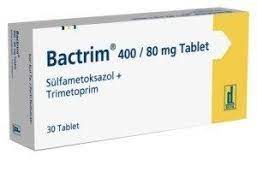
Bactrim is available in several forms, mainly oral tablets and liquid formulations. The most common tablet strengths include Bactrim 400 mg of sulfamethoxazole combined with 80 mg of trimethoprim. There is also a double-strength (DS) version, Bactrim DS, which contains 800 mg of sulfamethoxazole and 160 mg of trimethoprim.
Bactrim is also available in a liquid form for children. The dose is adjusted according to the child's weight. These formulations allow flexible dosing depending on the patient's needs and the type of infection being treated.
| Dosage Form |
Strength |
Brand Name |
Composition/Features |
| Tablets |
400 mg sulfamethoxazole / 80 mg trimethoprim |
Bactrim |
Standard formulation |
| Tablets, DS (Double Strength) |
800 mg sulfamethoxazole / 160 mg trimethoprim |
Bactrim DS |
Double strength |
| Oral Suspension |
200 mg sulfamethoxazole / 40 mg trimethoprim per 5 mL |
Bactrim Suspension |
Sweetened for paediatric use |
| Intravenous (IV) Solution |
80 mg trimethoprim / 400 mg sulfamethoxazole per 5 mL |
Bactrim IV |
For hospital use |
How and When to Take
To help reduce the development of drug-resistant bacteria and maintain the effectiveness of Bactrim (sulfamethoxazole and trimethoprim) tablets and other antibacterial medicines, the medicine should be used only to treat or prevent infections that are proven or strongly suspected to be caused by susceptible bacteria. Using Bactrim (sulfamethoxazole and trimethoprim) tablets when there is no proven or strongly suspected bacterial infection, or no preventive indication, is unlikely to benefit the patient. It also increases the risk of drug-resistant bacteria developing.
Bactrim is typically taken twice daily, with or without food. The exact dose depends on the type of infection being treated:
| Condition |
Patient Group |
Dosage |
| Urinary Tract Infections |
Adults |
Bactrim DS (800 mg sulfamethoxazole/160 mg trimethoprim) one tablet every 12 hours for 10 to 14 days. |
| |
Children (2 months and older) |
Dosage based on weight: approximately 40 mg/kg sulfamethoxazole and 8 mg/kg trimethoprim daily, divided into two doses. |
| Acute Otitis Media |
Children |
Similar weight-based dosing as for urinary tract infections. |
| Bronchitis |
Adults |
One Bactrim DS tablet every 12 hours for 14 days. |
Taking Bactrim at evenly spaced intervals is important to maintain adequate levels of the medicine in the bloodstream.
If You Forget to Take It
If you miss a dose of Bactrim, take it as soon as you remember. If it is nearly time for your next dose, skip the missed dose - do not take a double dose. Taking it consistently helps maintain its effectiveness.
What to Do in Case of Overdose
In the event of an overdose, seek immediate medical attention or contact a poisons service. Symptoms may include nausea, vomiting, dizziness or confusion. Prompt treatment is important to manage possible complications.
Precautions
Several precautions should be taken when using Bactrim to help ensure safe and effective treatment. As dose adjustments may be needed, tell your healthcare provider about any pre-existing medical conditions, especially kidney or liver problems.
In addition, Bactrim is not recommended during pregnancy or while breastfeeding because of possible risks to the unborn baby or breastfed infant. Patients should also be aware of possible allergic reactions. Stop taking it and seek medical attention if severe skin reactions or other serious side effects occur.
Patients should be advised to drink enough fluids to help prevent crystalluria and kidney stone formation.
When Bactrim (sulfamethoxazole and trimethoprim) tablets are prescribed to treat a bacterial infection, patients should be told that although they may start to feel better early in treatment, the medicine should be taken exactly as directed.
Allergy Warnings
Patients with a known allergy to sulfonamide antibiotics should avoid taking Bactrim because of the risk of severe allergic reactions, including Stevens-Johnson syndrome, anaphylaxis, toxic epidermal necrolysis, allergic myocarditis, exfoliative dermatitis, erythema multiforme, angioedema, drug fever, Henoch-Schönlein purpura, chills, serum sickness-like syndrome, widespread skin eruptions, generalised allergic reactions, photosensitivity, conjunctival and scleral injection, pruritus, urticaria and rash. Periarteritis nodosa and systemic lupus erythematosus have also been reported. It is important to tell healthcare providers about any previous allergic reactions before treatment.
Health Conditions Warnings
People with certain health conditions should use Bactrim with caution:
- patients with impaired kidney function may need dose adjustments because the medicine is cleared more slowly;
- caution is advised in patients with liver impairment, as this can affect how the medicine is processed;
- patients with conditions such as porphyria or megaloblastic anaemia should avoid this medicine unless specifically directed by their doctor.
This medicine is contraindicated in children younger than 2 months of age.
Although rare, deaths associated with the use of sulfonamides have occurred because of severe reactions, including Stevens-Johnson syndrome, fulminant hepatic necrosis, aplastic anaemia, toxic epidermal necrolysis, agranulocytosis and other blood dyscrasias.
Patients with AIDS may not tolerate or respond to Bactrim in the same way as patients without AIDS.
Regular monitoring may be needed during treatment in people with pre-existing conditions.
Sulfamethoxazole/trimethoprim Side Effects
Common side effects associated with Bactrim include:
- nausea and vomiting;
- rash or itching;
- diarrhoea.
Serious side effects can occur, although they are rare. These include:
- severe allergic reactions (e.g. Stevens-Johnson syndrome, anaphylaxis, toxic epidermal necrolysis, allergic myocarditis, exfoliative dermatitis, erythema multiforme, angioedema, drug fever, Henoch-Schönlein purpura, chills, serum sickness-like syndrome, widespread skin eruptions, generalised allergic reactions, photosensitivity, conjunctival and scleral injection, pruritus, urticaria and rash; periarteritis nodosa and systemic lupus erythematosus have been reported);
- blood disorders such as thrombocytopenia or leukopenia;
- gastrointestinal: hepatitis (including cholestatic jaundice and hepatic necrosis), raised serum transaminases and bilirubin, pseudomembranous enterocolitis, stomatitis, pancreatitis, glossitis, nausea, abdominal pain, vomiting, diarrhoea, anorexia;
- neurological: convulsions, aseptic meningitis, peripheral neuritis, vertigo, ataxia, tinnitus, headache;
- psychiatric: depression, nervousness, hallucinations, apathy;
- endocrine: sulfonamides have certain chemical similarities to some goitrogens, diuretics (acetazolamide and thiazides) and oral hypoglycaemic agents; cross-sensitivity may exist with these agents. Diuresis and hypoglycaemia have rarely occurred in patients receiving sulfonamides;
- musculoskeletal: arthralgia and myalgia; isolated cases of rhabdomyolysis have been reported with Bactrim, mainly in patients with AIDS;
- respiratory: cough, shortness of breath and pulmonary infiltrates;
- miscellaneous: fatigue, weakness, insomnia.
Clinical signs such as rash, sore throat, fever, arthralgia, pallor, purpura or jaundice may be signs of severe reactions.
Patients in the United Kingdom should report any unusual symptoms or side effects promptly to their healthcare provider.
Interactions with Other Medicines
Bactrim can interact with several medicines, which may increase the risk of side effects or reduce how well treatment works. These include:
- warfarin (increased risk of bleeding because of an enhanced anticoagulant effect);
- methotrexate (potentially increased toxicity because of similar effects on folate metabolism);
- diuretics (some diuretics may increase potassium levels when taken with Bactrim).
Always tell your healthcare provider about all the medicines you are taking, including medicines bought without a prescription and supplements, to help avoid possible interactions.
After Using Bactrim Medication
After using Bactrim, it is important to store it properly. Any unused or expired tablets should also be disposed of safely.
Storage
Bactrim should be stored at room temperature, away from moisture and heat. Keep it out of the reach of children and pets. Proper storage helps maintain the medicine's effectiveness throughout its shelf life.
Disposal
Do not flush unused or expired tablets down the toilet unless you have been told to do so. Ask your pharmacist about safe disposal methods or local guidance in the UK on disposing of medicines.
Bactrim (sulfamethoxazole/trimethoprim) is a combination antibiotic used to treat many bacterial infections. Understanding its composition, uses, precautions, dosing guidance, possible side effects and interactions with other medicines is important for safe and effective use. Always follow your healthcare provider's instructions and report any side effects or concerns during treatment.