Biaxin (clarithromycin) is a macrolide antibiotic used to treat a wide range of bacterial infections. It will not work for viral infections such as the common cold or flu. This medicine can also be used with anti-ulcer medicines to treat certain types of stomach ulcer.
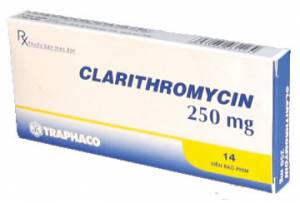
What Is Clarithromycin?
Clarithromycin, sold under the brand name Biaxin, is a semi-synthetic macrolide antibiotic that works against aerobic and anaerobic Gram-positive and Gram-negative bacteria. This makes it a versatile treatment option in clinical practice. Clarithromycin works by stopping bacteria from making the proteins they need to grow and multiply.
The medicine is available in several forms: immediate-release tablets, extended-release tablets, and oral suspension. It is used to treat infections such as pneumonia, strep throat and skin infections. Clarithromycin is known to penetrate body tissues well, which helps it work effectively against localised infections.
Indications for Adult Patients
For adults, Biaxin is commonly indicated in the following cases:
- pharyngitis/tonsillitis due to Streptococcus pyogenes;
- acute maxillary sinusitis caused by Haemophilus influenzae, Moraxella catarrhalis, or Streptococcus pneumoniae;
- acute bacterial exacerbation of chronic bronchitis due to Haemophilus influenzae, Haemophilus parainfluenzae, Moraxella catarrhalis, or Streptococcus pneumoniae;
- community-acquired pneumonia due to Haemophilus influenzae, Mycoplasma pneumoniae, Streptococcus pneumoniae, or Chlamydia pneumoniae (TWAR);
- uncomplicated skin and skin structure infections due to Staphylococcus aureus or Streptococcus pyogenes (abscesses usually require surgical drainage);
- disseminated mycobacterial infections due to Mycobacterium avium or Mycobacterium intracellulare.
Indications for Children
For children, Biaxin is commonly indicated in the following cases:
- pharyngitis/tonsillitis due to Streptococcus pyogenes;
- community-acquired pneumonia due to Mycoplasma pneumoniae, Streptococcus pneumoniae, or Chlamydia pneumoniae (TWAR);
- acute maxillary sinusitis due to Haemophilus influenzae, Moraxella catarrhalis, or Streptococcus pneumoniae;
- acute otitis media due to Haemophilus influenzae, Moraxella catarrhalis, or Streptococcus pneumoniae;
- uncomplicated skin and skin structure infections due to Staphylococcus aureus or Streptococcus pyogenes (abscesses usually require surgical drainage);
- disseminated mycobacterial infections due to Mycobacterium avium or Mycobacterium intracellulare.
Clinical Pharmacology
Clarithromycin is an antibiotic that is rapidly absorbed from the gastrointestinal tract after it is taken by mouth. Its absolute bioavailability, particularly for a 250 mg tablet, is about 50%.
When taken with food, absorption of a single 500 mg dose is slightly delayed, and peak plasma concentration occurs at about 2.5 hours instead of 2 hours. Food increases the peak plasma concentration of the medicine by around 24% but does not change its overall bioavailability. While food does not affect the presence of its active metabolite, 14-OH clarithromycin, it does slightly reduce its formation, as shown by an 11% decrease in the area under the plasma concentration-time curve (AUC). The medicine can therefore be taken with or without food.
In healthy adults, peak plasma concentrations of the active ingredient are reached within 2 to 3 hours after dosing. Steady-state concentrations are achieved in about three days: approximately 1 to 2 µg/mL for a 250 mg dose taken every 12 hours and around 3 to 4 µg/mL for a 500 mg dose taken every 8 to 12 hours. The elimination half-life of Biaxin is about 3 to 4 hours for the lower dose and extends to 5 to 7 hours for the higher dose. The pharmacokinetics of clarithromycin show slight non-linearity at these doses.
For the metabolite 14-OH clarithromycin, steady-state peak concentrations are around 0.6 µg/mL with a 250 mg dose. They can reach up to 1 µg/mL with a higher dose. The elimination half-life for this metabolite is approximately 5 to 6 hours for the lower dose and increases to about 7 to 9 hours for the higher dose. Steady-state concentrations are typically reached within three to four days.
About 20% of a 250 mg dose is eliminated in the urine as unchanged clarithromycin. By comparison, this rises to about 30% for a 500 mg dose. For a liquid suspension form (250 mg), urinary excretion can be even higher, at around 40%. The primary metabolite found in the urine is still the active form, which accounts for an additional 10% to 15% of the total dose.
In patients with human immunodeficiency virus (HIV) who received similar doses, steady-state concentrations of clarithromycin were comparable to those seen in healthy individuals. For those on higher doses (500 or 1000 mg), peak concentrations ranged from approximately 2 to 10 µg/mL. Interestingly, while steady-state levels of clarithromycin remain consistent in patients with liver impairment, its metabolite levels are lower because less is formed; however, this is offset by increased renal clearance.
Extended-release formulations of clarithromycin allow prolonged absorption and produce lower peak plasma concentrations than immediate-release forms, while maintaining equivalent AUCs over a full day. For instance, taking two extended-release tablets (500 mg each) once daily produces peak plasma concentrations within about five to eight hours after taking them. These extended-release tablets must be taken with food, as fasting can significantly reduce AUC.
In children requiring antibiotic treatment, doses of clarithromycin suspension generally lead to steady-state concentrations between 3 and 7 µg/mL for the parent drug and between 1 and 2 µg/mL for its metabolite when given at a dosage of 7.5 mg/kg every 12 hours. In children with HIV on higher doses (15 mg/kg), peak concentrations can range from approximately 6 to 15 µg/mL.
Clarithromycin also penetrates effectively into middle ear fluid in children with otitis media. Studies have shown that food can influence plasma levels; for example, in adults taking clarithromycin suspension, food slightly lowers peak plasma concentration while increasing absorption time.
Lastly, when combined with omeprazole (a proton pump inhibitor), clarithromycin plasma levels increase significantly for both the drug itself and its metabolite, suggesting that this combination may improve treatment effectiveness by increasing drug concentrations in tissues where infection may be present.
Ingredients
Clarithromycin tablets contain active and inactive ingredients that help with their effectiveness and stability. Each tablet typically contains clarithromycin (250 mg or 500 mg) as the active ingredient, along with inactive ingredients such as croscarmellose sodium, hypromellose, magnesium stearate and microcrystalline cellulose, plus other ingredients used in tablet formulation and absorption.
What Are the Dosages of Clarithromycin?
Clarithromycin is a white to off-white crystalline powder. It is soluble in acetone, slightly soluble in methanol, ethanol and acetonitrile, and practically insoluble in water.
Forms of Biaxin
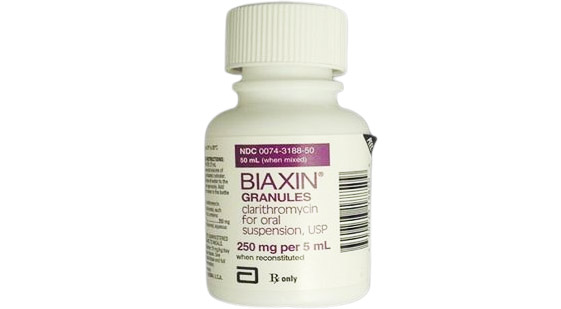
Biaxin is available as an immediate-release tablet, extended-release tablet and granules for oral suspension. The medicine is available in several strengths.
Each yellow oval film-coated immediate-release Biaxin tablet contains 250 mg or 500 mg of clarithromycin.
Each yellow oval film-coated Biaxin XL tablet (clarithromycin extended-release tablets) contains 500 mg of the active ingredient.
After reconstitution, each 5 mL of Biaxin suspension (clarithromycin for oral suspension) contains 125 mg or 250 mg of the active ingredient. Each bottle of Biaxin granules contains 1250 mg (50 mL size), 2500 mg (50 and 100 mL sizes), or 5000 mg (100 mL size) of the active ingredient.
Dosages of Clarithromycin
The usual adult dosage for most infections is 250 mg every 12 hours or 500 mg every 8 to 12 hours, depending on the severity of the infection.
The recommended daily dosage for children is 15 mg/kg/day divided every 12 hours for 10 days (up to the adult dose).
Clarithromycin may be prescribed in combination with other medicines for specific conditions such as Helicobacter pylori (H. pylori) eradication.
Biaxin tablets and Biaxin Granules (clarithromycin for oral suspension) may be taken with or without food. Biaxin XL (clarithromycin extended-release tablets) should be taken with food. Biaxin XL tablets should be swallowed whole, not chewed, broken or crushed.
If you miss a dose, take it as soon as you remember. Skip the missed dose if it is nearly time for your next scheduled dose. Do not take extra medicine to make up for a missed dose.
Important Safety Information
Healthcare providers must consider several safety factors before treatment.
Prescribing Biaxin without a proven or strongly suspected bacterial infection, or for prophylaxis, is unlikely to benefit the patient and increases the risk of drug-resistant bacteria developing.
This medicine may harm an unborn baby. Tell your doctor if you are pregnant or planning to become pregnant. Clarithromycin can pass into breast milk and may harm a breastfed baby. Tell your doctor if you are breastfeeding.
Caution is advised in patients with liver impairment, as clarithromycin is metabolised by the liver. Patients should be monitored for signs of liver problems or severe allergic reactions during treatment.
Dose adjustments may be necessary for patients with renal impairment.
This medicine is not approved for children younger than 6 months old.
If you've ever had heart problems, clarithromycin may cause a heart attack or stroke after you've taken this medicine. Tell your doctor if you have heart disease.
Continue treatment with clarithromycin for the full recommended course, even if your symptoms improve. Missing doses may also make antibiotic-resistant infections more likely in the future.
In patients who do not respond to treatment, susceptibility testing should be carried out. If resistance to clarithromycin is confirmed, treatment that does not include clarithromycin is recommended.
A study in geriatric patients looked at how the body processes clarithromycin in healthy older adults aged 65 to 81. When these individuals took 500 mg of the drug every 12 hours, blood levels of clarithromycin and its active metabolite were higher than those seen in younger adults. This increase is likely linked to the natural decline in kidney function that comes with age. However, older patients did not experience more side effects during clinical trials than younger patients. It is important to consider dose adjustment in elderly patients with severe kidney problems.
Prescription
In the UK, clarithromycin requires a prescription from a licensed healthcare provider. It should be prescribed based on clinical judgement about the type of infection being treated and the patient's medical history. Healthcare providers must also consider possible drug interactions when prescribing clarithromycin.
Contraindications to Biaxin
There are several contraindications associated with clarithromycin use. Patients with known allergies to clarithromycin or any component of the formulation should not take this medicine. Taking this drug at the same time as certain medicines (for example, some statins or anticoagulants) can lead to serious side effects because drug levels may increase. Patients with a history of liver disease should avoid clarithromycin because of the risk of liver toxicity. Also, tell your doctor if you have any of the following conditions:
- coronary artery disease (clogged arteries);
- heart problems;
- myasthenia gravis;
- long QT interval (QT) syndrome (in you or a family member);
- liver disease;
- diabetes;
- kidney disease;
- an electrolyte imbalance (such as low levels of potassium or magnesium in your blood).
Side Effects
Most side effects seen in clinical trials were mild and temporary.
Common side effects associated with clarithromycin include nausea, vomiting, diarrhoea, abdominal pain and headaches.
Severe side effects can include liver problems, allergic reactions (such as rash or itching), QT prolongation (which may lead to arrhythmias), fluttering in your chest, shortness of breath, and sudden dizziness (as if you might pass out).
Patients may develop liver problems (loss of appetite, upper stomach pain, tiredness, dark urine, clay-coloured stools, jaundice) or kidney problems (little or no urine, swelling in your feet or ankles, feeling tired or short of breath). Patients in the United Kingdom should report any unusual symptoms or severe reactions to their healthcare provider straight away.
Antibiotic medicines can cause diarrhoea. This may be a sign of a new infection. If you have watery or bloody diarrhoea, call your doctor. Do not use anti-diarrhoea medicine unless your doctor tells you to.
Interactions of Biaxin With Other Medicines
Clarithromycin has notable interactions with various medicines because it inhibits cytochrome P450 3A4 (CYP3A4) enzymes. The main interactions include:
- pimozide;
- cisapride;
- lovastatin or simvastatin;
- lomitapide;
- ergotamine or dihydroergotamine.
Giving single doses of clarithromycin together with carbamazepine has increased plasma concentrations of carbamazepine. Monitoring carbamazepine blood levels may be considered.
Giving Biaxin tablets and didanosine at the same time to 12 adults with HIV resulted in no statistically significant change in didanosine pharmacokinetics.
Spontaneous reports in the post-marketing period suggest that taking clarithromycin together with oral anticoagulants may increase the effects of the oral anticoagulants.
Healthcare providers should review all the medicines a patient is taking before treatment. Tell your doctor about all the medicines you currently take.
Overdose of Biaxin
In cases of overdose, symptoms may include gastrointestinal problems such as nausea and vomiting. A severe overdose could lead to more serious health problems such as liver damage or cardiac arrhythmias. Immediate medical attention is needed if an overdose is suspected.
Prompt elimination of unabsorbed drug and supportive care should be used to treat reactions that accompany overdose. As with other macrolides, clarithromycin serum concentrations are not expected to be significantly affected by haemodialysis or peritoneal dialysis.
Storage
Clarithromycin should be stored at room temperature, 20°C to 25°C (68°F-77°F), away from moisture and heat. The oral suspension form must be refrigerated after reconstitution and discarded after the period stated on the label.
Benefits of Using Biaxin
|
Benefit
|
Description
|
|
Broad-spectrum activity
|
Effective against various Gram-positive and Gram-negative bacteria
|
|
Tissue penetration
|
High concentrations achieved in tissues enhance efficacy
|
|
Convenient dosing
|
Available in multiple forms for ease of administration
|
|
Combination therapy
|
Can be used effectively in combination regimens for H. pylori eradication
|