Betadine (Povidone-Iodine)

Betadine
4.97 ratingsReviews
Generic:
Povidone-Iodine
Analogs:
Povidone Iodine Chlorhexidine Hibiclens Savlon Octenisept Hydrogen Peroxide Benzalkonium Chloride
In stock: 13 packs
AdultsPregnancyAllergiesDiabetesBreastfeedingChildrenDriving

Dosages

Betadine 10%

Quantity Price per tube You save Total price
1 £33.56 - £33.56
2 £22.56 £22.00 £45.11
3 £18.89 £44.00 £56.67

Manufacturers

Mundipharma GmbHMundipharma International LimitedMundipharma Pharmaceuticals S.r.l.Mundipharma Pty LimitedMylan Laboratories SASWockhardt Ltd.

Payment & Delivery

Package Example

Your order is carefully packed and is dispatched within 24 hours. Here is what a typical package looks like.

Sized like a regular personal letter (approximately 24x11x0.7 cm), with no indication of what is inside.

Front View
Front View
Side View
Side View
Back View
Back View
Delivery Times
Delivery MethodEstimated delivery
Express Free for orders over £222.24Estimated delivery to the UK: 4-7 days
Standard Free for orders over £148.16Estimated delivery to the UK: 14-21 days
EMSRoyal Mail
Payment Methods
VisaMastercardAmerican ExpressJCBBitcoin, USDTApple PayGoogle PayPayPalKlarnaClearpay

Discount Coupons

  • New Year's Day - 1 January 2026 9% NEWYEAR9
  • Valentine's Day - 14 February 2026 6% VALENTINE6
  • St David's Day - 1 March 2026 4% DAVID4
  • St Patrick's Day - 17 March 2026 5% PATRICK5
  • St George's Day - 23 April 2026 4% GEORGE4
  • May Day - 1 May 2026 5% MAYDAY5
  • Halloween - 31 October 2026 6% HALLOWEEN6
  • Guy Fawkes Night - 5 November 2026 5% GUY5
  • Christmas Eve - 24 December 2026 9% XMASEVE9
  • Christmas Day - 25 December 2026 10% XMAS10
  • Boxing Day - 26 December 2026 10% BOXING10
  • New Year's Eve - 31 December 2026 8% NYE8

FAQ

No. Topical povidone-iodine 10% antiseptic products are not prescription-only medicines in the United Kingdom. The exact product may be classified as a pharmacy medicine or a general-sale medicine under its individual licence.

For a minor wound, povidone-iodine ointment is generally used for short-term antiseptic care and can be stopped when it is no longer needed, provided the area is healing normally. Do not continue applying it for an extended period or over a large area without medical advice.

Seek medical assessment if the wound is not improving, becomes increasingly painful, red, swollen, warm, or produces pus, or if fever develops. Do not simply apply more ointment or extend use to treat a possible infection.

The active ingredient listed for this ointment is povidone-iodine 10%, the antiseptic ingredient associated with Betadine products. Products with the same active ingredient and strength may still differ in manufacturer, packaging and inactive ingredients.

A different tube or box design alone does not mean the product is incorrect. Check that the label states povidone-iodine 10%, ointment and topical use, then compare the manufacturer, lot number and expiry date; do not use it if the strength, dosage form, seal or physical condition appears wrong or compromised.

This ointment is available in a 10% strength of povidone-iodine. No other strength is listed for this product.

Povidone-iodine 10% ointment is a topical antiseptic used to help prevent or treat infection in minor cuts, grazes, superficial wounds and minor burns. It is intended for use on the skin, not for treating deep, extensive or seriously infected wounds without clinical assessment.

Regular use of povidone-iodine ointment should be avoided during pregnancy because iodine absorbed through the skin can cross the placenta and affect fetal thyroid function. It should also be avoided while breastfeeding, as absorbed iodine may enter breast milk and affect the infant's thyroid; seek medical advice if use is considered necessary.

Clean the affected skin, apply a small amount of the 10% ointment as a thin layer, and use a dressing if needed. It is for topical use only; avoid the eyes and avoid prolonged or extensive application unless advised by a healthcare professional.

It can cause temporary stinging, burning, redness, itching or skin irritation at the application site. Stop use and seek advice for a rash, swelling, blistering or other signs of an allergic reaction; repeated use on large areas can increase iodine absorption and may affect thyroid function.

Description

Note: Images in the description are provided for informational purposes and may differ from the actual appearance of the product. Please refer to the product name, strength, active ingredients, and pharmaceutical form.

Any minor cut or burn can become a real problem if it gets infected. Betadine, which contains povidone-iodine as its active ingredient, works as an antiseptic. It helps prevent infection and can slow it down if it is already present in the wound.

When Can Betadine Be Used?

Betadine works against many types of infectious agents, including viruses, bacteria, fungi, fungal spores and some protozoa. Because of this, it may be used for the treatment and prevention of:

  • skin infections caused by bacteria and fungi;
  • vaginal yeast infection;
  • mixed and non-specific vaginal infections;
  • trichomoniasis;
  • infection of open wounds (cuts, burns);
  • preoperative disinfection of the hands and the operative area;

If you compare the yellow and green Betadine bottles, there is no difference between them, as both contain a 10% Betadine solution.

How Should Betadine Be Used?

How you use this medicine depends on where the infection or wound is and which form you are using. Betadine comes as a powder, vaginal suppositories, solution and other forms.
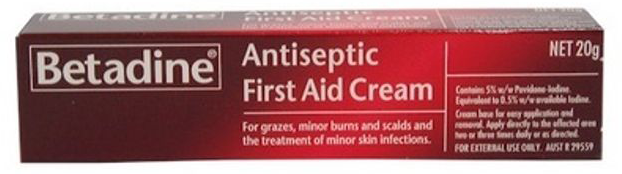
Betadine Cream

For intravaginal use of Betadine, a yeast infection may improve after a week of daily treatment. Insert one Betadine 200 mg suppository deep into the vagina once a day before sleep. If the infection does not clear up during this time, treatment may be continued for another week.

The use of Betadine yellow for acne is linked to the medicine's ability to kill bacteria that can contribute to clogged pores. By cleansing the area affected by acne, it may help open the pores and support the healing process. As a result, your skin condition may improve.

Betadine should be used as a spot treatment. Apply a thin layer to the pimple. Make sure the area is clean and dry before applying the medicine.
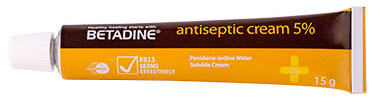
Betadine Antiseptic Cream

Unlike regular iodine, you may apply Betadine on open wounds. That is because it contains no alcohol, so it is less likely to irritate injured tissue.

Betadine may be used not only for treatment but also to help prevent infection. It may therefore be useful to keep it in your first aid kit.

Betadine Warnings and Contraindications

Because iodine is a key component of this medicine, some people should avoid using it. These include:

  • patients with hyperthyroidism or other thyroid problems;
  • patients with an allergy to iodine or any other ingredient of the product;
  • patients with renal impairment.

In addition, Betadine should not be used by people who have had treatment with radioactive iodine (for example, for thyroid cancer). The medicine may also interact with some other medicines and supplements, for example when used together with lithium-containing products. That is why you should tell your healthcare provider about all medicines you are currently using.
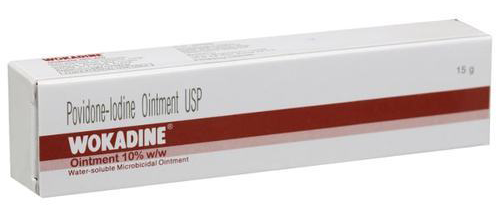
Wokadine Cream

When used intravaginally, Betadine may damage latex condoms. That is why it is better to use additional contraception during treatment and for 5 days after finishing treatment with Betadine vaginal suppositories.

Because of its antiseptic properties, the medicine may act as a spermicide. As a result, Betadine may affect a woman's ability to become pregnant. It is best not to use it if you are trying to get pregnant.

Can You Use Betadine During Pregnancy and Breastfeeding?

Betadine's active ingredients can cross the placenta. Although it is not known to cause congenital abnormalities, it may affect the function of the pituitary gland in an unborn baby or make a newborn hypersensitive to iodine.

Regular use during pregnancy may be harmful to the baby. However, it may be used for a short time under medical supervision when clearly needed. One clinical trial by Hungarian researchers reported no danger from Betadine use in pregnant women at 37-40 weeks of gestation, as the risk of hypothyroidism in mature fetuses is very low.

What Are the Possible Side Effects?

When Betadine is applied to the skin, side effects are more likely if it is used on large areas for a long time. However, most people do not have any problems with it.

The most common reactions to Betadine include:

  • stinging and burning where it was applied;
  • skin irritation or redness;
  • hypersensitivity reactions to the medicine.

In extremely rare cases, serious iodine poisoning is possible if the product is used in a way that goes against a British doctor's recommendations. It may present as:

  • a metallic taste in the mouth;
  • dyspepsia, diarrhoea;
  • severe renal impairment, being unable to pass urine;
  • eye irritation.

If you experience any of these signs, go to A&E promptly.

Medically reviewed by
Brian Holtry
MD, infectious diseases specialist and medical writer
Updated 11 August 2026

Customer questions

Asked by Hannah Williams, Manchester, United Kingdom

I'm ordering the ointment for my home first-aid kit. Will I know how much shelf life is left before it arrives?

Answered by Support team

We cannot guarantee a specific remaining shelf life before dispatch. Check the expiry date printed on the tube and outer packaging when your order arrives, and do not use the ointment after that date.

Asked by Aoife Murphy, Belfast, United Kingdom

I live in Belfast. Can I check whether this ointment can be delivered to my address before I pay?

Answered by Support team

Yes, use the delivery destination options at checkout to check availability for your Belfast address before payment. Delivery eligibility can vary by destination, so it cannot be confirmed in advance for every postcode.

Asked by James Carter, Portsmouth, United Kingdom

I punctured my hand on a dirty garden nail this morning. Is Betadine ointment enough to deal with it?

Answered by Support team
Medical reviewed by Brian Holtry

No. A puncture wound, particularly one caused by a dirty object, needs clinical assessment rather than self-treatment with antiseptic ointment alone. A clinician can clean the wound properly and check whether tetanus protection or other treatment is needed.

Product specifications

Active ingredientPovidone-iodine
Drug classTopical antiseptic
Dosage formOintment
Available strengths10%
RouteTopical
StorageStore at 20°C to 25°C, away from excessive heat, and keep the tube tightly closed.
ATC codeD08AG02

Regulatory information

Market authorisationPovidone-iodine is licensed for human medicinal use in the United Kingdom.
Supply classificationThis ointment formulation does not require a prescription and can be purchased over the counter.

More information