Cleocin capsules contain clindamycin 150 mg and are available in five pack sizes ranging from 30 to 180 capsules. Choose a quantity that matches the prescribed course rather than ordering extra capsules solely for a lower unit price.
This tool only estimates pack size from the values you enter.
×
You need: 21 tabsRecommended packs: 1 x 30 = 30 tabs
Manufacturers
PfizerPfizer Italia S.r.l.Pharmacia & Upjohn Company LLC
Payment & Delivery
Package Example
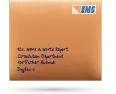
Your order is carefully packed and is dispatched within 24 hours. Here is what a typical package looks like.
Sized like a regular personal letter (approximately 24x11x0.7 cm), with no indication of what is inside.
Front View
Side View
Back View
Delivery Times
Delivery Method
Estimated delivery
Express Free for orders over £224.31
Estimated delivery to the UK: 4-7 days
Standard Free for orders over £149.54
Estimated delivery to the UK: 14-21 days
Payment Methods
Discount Coupons
New Year's Day - 1 January 2026 9%NEWYEAR9
Valentine's Day - 14 February 2026 6%VALENTINE6
St David's Day - 1 March 2026 4%DAVID4
St Patrick's Day - 17 March 2026 5%PATRICK5
St George's Day - 23 April 2026 4%GEORGE4
May Day - 1 May 2026 5%MAYDAY5
Halloween - 31 October 2026 6%HALLOWEEN6
Guy Fawkes Night - 5 November 2026 5%GUY5
Christmas Eve - 24 December 2026 9%XMASEVE9
Christmas Day - 25 December 2026 10%XMAS10
Boxing Day - 26 December 2026 10%BOXING10
New Year's Eve - 31 December 2026 8%NYE8
Brand Names
Also known as (by country):
Country
Brand Names
United Kingdom
Dalacin C
FAQ
Oral clindamycin capsules are prescription-only medicines in UK local pharmacies. Our store policy allows Cleocin 150 mg capsules to be ordered without a prescription and sent by mail.
Do not extend a clindamycin course independently. Persistent symptoms may mean that the infection needs reassessment, including consideration of the cause, bacterial susceptibility, complications or a different treatment.
Do not keep leftover clindamycin for a future illness or give it to someone else. Take unused capsules to a pharmacy for appropriate disposal where this service is available.
This product is available as oral capsules containing 150 mg of clindamycin. The prescribed number of capsules per dose depends on the infection and the individual treatment plan.
During pregnancy, clindamycin should be used only when clearly needed after a clinician has assessed the expected benefit and potential risk. Clindamycin passes into breast milk, and use whilst breastfeeding is not recommended because it may cause serious adverse effects in a nursing infant.
Cleocin 150 mg capsules are taken by mouth exactly as prescribed. Swallow each capsule whole with a full glass of water to reduce oesophageal irritation; it may be taken with or without food, and doses should be spaced evenly as directed.
Description
Note:
Images in the description are provided for informational purposes and may differ from the actual appearance of the product. Please refer to the product name, strength, active ingredients, and pharmaceutical form.
Cleocin 150 mg capsule prices and choices
Cleocin contains clindamycin, a lincosamide antibiotic. We offer this product as 150 mg oral capsules in five package quantities, so the practical choice is the number of capsules rather than a choice between strengths or pharmaceutical forms. The appropriate quantity should correspond to the course specified by a prescriber, not simply to the package with the lowest cost per capsule.
When comparing our options, first confirm that the prescription or treatment instructions refer to oral clindamycin 150 mg capsules. Other clindamycin products, including liquids, injections, creams and vaginal preparations, are different pharmaceutical forms and cannot be treated as interchangeable with these capsules. Once the medicine, strength and route have been confirmed, the package comparison can help with the financial part of the decision.
Comparing package size and unit value
The comparison below presents the available quantities, our current prices, unit values and relative savings. It is the source for exact price information on this guide, allowing the options to be compared without relying on external price estimates or unsupported market averages.
A lower unit price does not necessarily make a larger package the better choice. Antibiotics should be obtained in a quantity appropriate for confirmed treatment, and unused capsules should not be saved in anticipation of an infection that has not been assessed. Consider the total required quantity, the expiry information supplied with the medicine and whether any excess would remain after the prescribed course.
Price is therefore one factor rather than the deciding factor. If two available packages could provide the required quantity, compare their total cost as well as their unit value. Do not assume that future treatment will use the same antibiotic, dose or duration, because those details can change according to the infection and clinical assessment.
Which pack size matches the prescribed course?
A prescriber determines the dose frequency and treatment duration according to factors such as the site and severity of the infection, the likely or confirmed bacteria, age and other clinical circumstances. The number of capsules required can only be calculated after those instructions are known. The fact that we offer one capsule strength does not mean that every person will take the same number of capsules or follow the same schedule.
Before selecting a package, check:
that the medicine specified is clindamycin in oral capsule form;
that the prescribed strength is 150 mg;
the number of capsules required per dose and the number of doses per day;
the prescribed number of treatment days; and
whether the resulting total corresponds to an available package quantity.
Do not order additional capsules solely because a larger package appears to offer better unit value. Leftover antibiotics must not be shared, used for a later illness without clinical advice or kept indefinitely. In the UK, unwanted medicines can be taken to a community pharmacy for safe disposal rather than placed in household waste or flushed away.
Cleocin, generic clindamycin and other antibiotics
Cleocin is a brand name for clindamycin. The active ingredient identifies the antibiotic, while the brand identifies a particular marketed product. Brand and generic products may contain the same active ingredient and strength, but packaging, excipients, authorisation holder and availability can differ. Anyone with an allergy or intolerance to an inactive ingredient should check the leaflet for the exact product supplied.
Clindamycin is not automatically interchangeable with another antibiotic. Our broader Antibiotics category includes products such as Keflex and Augmentin, but these contain different active ingredients and have different antibacterial coverage, cautions and dosing requirements. Their presence in the same category does not mean that they are suitable substitutes for Cleocin.
The choice between clindamycin, cephalexin, amoxicillin with clavulanic acid or another antibiotic is clinical rather than purely commercial. It may depend on the infection, local resistance patterns, microbiology results, previous reactions and other medicines. A prescribed antibiotic should not be replaced on the basis of package price alone.
Established role of oral clindamycin
Clindamycin is used to treat susceptible bacterial infections, including certain serious infections involving skin and soft tissue, bones and joints, the mouth or other sites where anaerobic or susceptible Gram-positive bacteria may be involved. The exact authorised indications can vary between products and markets, so the patient information leaflet supplied with the capsules and the prescriber's instructions remain important.
Clindamycin does not treat viral infections such as colds or influenza. Using an antibiotic when it is not needed exposes the person to side effects without treating the illness and contributes to antibiotic resistance. These capsules should therefore be used only for the infection and treatment course for which they were prescribed.
How do Cleocin capsules work and how are they taken?
Clindamycin interferes with bacterial protein production. This inhibits the growth of susceptible bacteria and, at higher concentrations for some organisms, may kill them. Whether it is appropriate depends on the bacteria causing the infection and their susceptibility to the antibiotic.
Swallow each capsule whole with a full glass of water. Remaining upright while swallowing and using enough water help reduce the risk of irritation to the oesophagus. Follow the prescribed dose and timing rather than deriving a schedule from the package size. If the label or leaflet for the supplied product contains additional instructions, follow those directions.
Complete the prescribed course unless a clinician tells you to stop or a serious reaction requires urgent medical advice. If a dose is missed, follow the leaflet supplied with the medicine or ask a pharmacist. General missed-dose instructions can vary, but two doses should not be taken together simply to compensate without professional advice.
Important safety points and interactions
Clindamycin can cause gastrointestinal side effects, including nausea, abdominal discomfort and diarrhoea. Severe, persistent or bloody diarrhoea during treatment or after it has finished needs urgent medical assessment because it may indicate antibiotic-associated colitis. Do not try to manage significant antibiotic-related diarrhoea with an anti-diarrhoeal medicine unless a clinician advises it.
Do not take clindamycin if you have a known allergy to clindamycin, lincomycin or an ingredient in the particular capsule. Seek urgent help for signs of a serious allergic reaction, such as difficulty breathing, swelling of the face or throat, or a widespread blistering rash.
Relevant points to discuss with a clinician or pharmacist include:
Pregnancy: clindamycin crosses the placenta and should be used only when a clinician considers it clearly necessary after weighing the expected benefits and risks.
Breastfeeding: clindamycin passes into breast milk and may cause significant gastrointestinal effects in a breastfed infant, so oral use while breastfeeding is generally not recommended under the supplied product guidance.
Children: paediatric doses are based on body weight. A 150 mg capsule may not provide the exact dose required, and capsules are unsuitable for a child who cannot swallow them whole.
Other medicines: clindamycin can increase the effects of muscle-relaxing medicines used during anaesthesia. It may also affect clotting control with vitamin K antagonist anticoagulants, so medication should be reviewed before treatment.
Clindamycin has no or negligible influence on the ability to drive or use machinery. However, anyone who feels unwell or develops an unexpected reaction should avoid driving until it is safe to do so. Suspected side effects can be reported through the MHRA Yellow Card scheme as well as discussed with a healthcare professional.
UK access and prescription context
Oral clindamycin capsules are prescription-only medicines in the United Kingdom. The supplied product information does not confirm a UK marketing authorisation specifically for a product branded Cleocin in the 150 mg oral capsule form. UK registration would need to be checked against the exact product name, strength, pharmaceutical form and authorisation holder rather than inferred from the active ingredient alone.
Separately, our catalogue currently does not mark a prescription as an ordering requirement for this product. That operational setting does not change its UK prescription-only classification or establish that it may be used without appropriate clinical authorisation. Customers seeking delivery in the UK should confirm the applicable requirements with a clinician or our pharmacist and should use oral clindamycin only under a prescriber's direction.
How do ordering and support work with us?
We have operated since 2010, and our support team is available 24/7 by email, online chat and phone. A pharmacist is also available for medicine-related questions, although the supplied service information does not state that pharmacist access itself is available at every hour. Our prices are displayed in pounds sterling.
Before placing an order:
confirm that the intended product is Cleocin 150 mg oral capsules;
select the package quantity that corresponds to the clinically authorised course;
review the total price and order information before payment;
enter accurate contact and delivery details, including the postcode for a UK address; and
contact us if the product identity, package quantity or ordering requirements are unclear.
Delivery methods and timescales can depend on the destination and the options made available during checkout. Review the applicable delivery information before paying rather than assuming a particular arrival date. Questions about the medicine itself should be directed to a pharmacist or prescriber, while our support team can help with catalogue and order queries.
A balanced package-value decision
The best-value package is the one that combines an appropriate quantity with an acceptable total price. The package-value comparison shows how our current options differ financially, but it should be applied only after the required number of capsules has been established. A larger package is not better value if it creates avoidable leftovers or encourages use outside a prescribed course.
Store Cleocin capsules at 20°C to 25°C in a tightly closed container, away from excess moisture and heat. Keep them in their original packaging with the patient information leaflet, out of the sight and reach of children, and check the expiry date before use. Storage conditions and expiry should be considered when comparing quantities, but they do not justify purchasing antibiotics for an unconfirmed future need.
In summary, confirm the brand or active ingredient, 150 mg strength, oral capsule form and total prescribed quantity first. Then use the package-value comparison to evaluate total cost and cost per capsule. This keeps medical suitability separate from financial value and supports a more practical choice without treating the lowest unit price as a recommendation.
MD, infectious diseases specialist and medical writer
Updated 11 August 2026
Customer questions
Q
Asked by Joshua L, Belfast, United Kingdom
I have previously taken Dalacin C in the United Kingdom. Can I use these Cleocin capsules instead if I need clindamycin again?
A
Answered by Support team
Check that the label or prescription matches the active ingredient, clindamycin, the 150 mg strength and oral capsule dosage form before considering a replacement. The manufacturer, capsule appearance, packaging and inactive ingredients can differ, so a trade name alone does not establish that products are interchangeable.
Q
Asked by Eimear, Newry, United Kingdom
I live in Newry, Northern Ireland. Can I check whether Cleocin can be delivered to my address before I pay?
A
Answered by Support team
Yes. Enter your Newry delivery address during checkout to see the destination options available for your order before payment. Availability should be confirmed there rather than assumed for every Northern Ireland address.
Q
Asked by Daniel, Sheffield, United Kingdom
Before ordering from Sheffield, can I use my postcode to see whether this medicine can be delivered to me?
A
Answered by Support team
Yes. Use your Sheffield postcode and delivery address at checkout to check the options available before placing the order. Delivery eligibility is confirmed by the checkout rather than guaranteed in advance.
Q
Asked by Harriet, Glasgow, United Kingdom
I take warfarin and my dentist is considering clindamycin for an infection. Is there anything particular I need to do?
Clindamycin can alter the effect of warfarin and may increase the risk of bleeding in some people. The prescriber and anticoagulation service should know before treatment starts, as extra INR monitoring or adjustment of warfarin may be needed.
Product specifications
Active ingredient
Clindamycin
Drug class
Lincosamide antibiotic
Dosage form
Capsules
Available strengths
150 mg
Route
Oral
Storage
Store at 20°C to 25°C in a tightly closed container, away from excess moisture and heat.
ATC code
J01FF01
Regulatory information
Licensing statusClindamycin is authorised for human medicinal use within the United Kingdom.
Legal classificationClindamycin capsules are classified as a prescription-only medicine (POM) and require a valid prescription.