Uses
Tuberculosis
Active Tuberculosis
Trecator (ethionamide) is used with other anti-tuberculosis medicines to treat active tuberculosis, mainly when Mycobacterium tuberculosis is resistant to isoniazid or rifampicin, or when these medicines cannot be used because of intolerance. Ethionamide should not be used on its own because resistance can develop quickly.
Standard regimens for drug-susceptible pulmonary tuberculosis usually last at least 6 months (about 26 weeks). Treatment for drug-resistant tuberculosis is individualised and often lasts longer; in the UK, patients should be managed in consultation with an expert in drug-resistant TB.
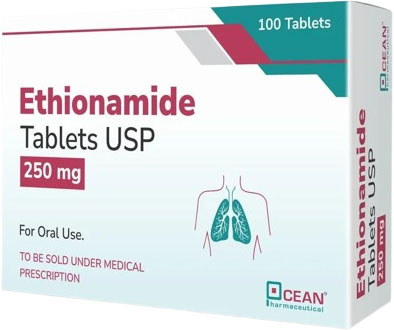
If ethionamide is added as a new medicine to a regimen in patients with proven or suspected drug-resistant tuberculosis, it should be given with other active medicines based on susceptibility testing.
Other Mycobacterial Infections
Ethionamide has been used off-label as part of salvage regimens for some non-tuberculous mycobacterial infections. It should only be used in this way under the guidance of clinicians experienced in treating these infections.
Clinical Studies in the United Kingdom
In the United Kingdom, clinical research on ethionamide has mainly taken place in the setting of multidrug-resistant tuberculosis, often as part of combination regimens rather than as a treatment on its own. UK studies and case series have looked at treatment outcomes, tolerability and side effects, with common concerns including gastrointestinal intolerance, hepatotoxicity and hypothyroidism. Ethionamide has also been included in pharmacokinetic studies and regimen-optimisation work linked to specialist TB centres and national surveillance cohorts. Overall, the UK literature is limited and largely observational, reflecting its use in complex, resistant TB cases rather than in large randomised trials.
Administration
Ethionamide is taken by mouth.
Ethionamide tablets can be taken with or without food. If stomach upset occurs, taking the dose with food or at bedtime and/or dividing the daily dose may help improve tolerability.
Dosage
Active Tuberculosis
When treating active tuberculosis, ethionamide should not be given on its own. The usual adult dose when used with other anti-tuberculosis medicines is 15-20 mg/kg/day (maximum 1 g (1,000 mg) daily). The dose may be taken once daily or, if GI intolerance occurs, in divided doses.
Starting treatment with 250 mg daily and gradually increasing to the best tolerated dose may be helpful. One reported regimen uses ethionamide 250 mg daily for 1-2 days, followed by 250 mg twice daily for 1-2 days, then increased to 1 g (1,000 mg) daily in 3 or 4 divided doses.
Pediatric Dosage
Because data are limited, ethionamide generally should not be used in children younger than 12 years unless the organisms are clearly resistant to first-line treatment and systemic spread or other life-threatening complications of tuberculosis are considered likely. Recommended paediatric dosing in reference sources ranges from 10-20 mg/kg/day (up to 1 g (1,000 mg) daily) given in 2 or 3 divided doses; once-daily dosing has also been used in some situations under specialist supervision.
Cautions
GI Effects
Gastrointestinal problems are the most common side effects of ethionamide and may be dose related. These include nausea, vomiting, diarrhoea, abdominal pain, excessive salivation, metallic taste, stomatitis, loss of appetite and weight loss. They may be reduced by lowering the dose, changing when the medicine is taken, dividing the daily dose, or using anti-sickness treatment where appropriate.
Nervous System and Special Senses Effects
Psychiatric and neurological effects (for example low mood, restlessness, drowsiness, dizziness and headache) have been reported. Rarely, peripheral neuritis, paraesthesia, seizures, tremor, hallucinations, diplopia, optic neuritis and blurred vision have occurred. Some clinicians use pyridoxine (vitamin B6) to help prevent or manage neuropathy, especially when other neurotoxic anti-tuberculosis medicines are used at the same time.
Hepatic Effects
Temporary increases in serum bilirubin and transaminases (AST/ALT) have been reported. Hepatitis, with or without jaundice, has also been reported. Hepatotoxicity is generally reversible after the medicine is stopped.
Severe Skin Reactions
Severe skin reactions (for example Stevens-Johnson syndrome, toxic epidermal necrolysis, DRESS and AGEP) have been reported with anti-tuberculosis drug combinations that included ethionamide. If symptoms or signs of a severe skin reaction occur, stop the suspected medicine or medicines immediately and seek urgent medical care.
Precautions and Contraindications
Ethionamide is contraindicated in patients with severe hepatic impairment and in patients who are hypersensitive to the medicine.
Serum transaminases (AST/ALT) should be checked before treatment starts and monitored monthly during treatment. If transaminase levels become raised, ethionamide and the accompanying anti-tuberculosis medicine or medicines may be stopped temporarily until the abnormalities resolve, then reintroduced one by one to identify the causative agent or agents.
Eye examinations (including ophthalmoscopy) should be carried out before treatment and periodically during treatment. Patients in the United Kingdom should be advised to speak to their clinician if blurred vision or any loss of vision, with or without eye pain, occurs.
Blood glucose should be checked before treatment and periodically during treatment; people with diabetes should watch for episodes of hypoglycaemia. Periodic monitoring of thyroid function is recommended, as hypothyroidism, with or without goitre, has been reported.
Pregnancy and Lactation
Safe use of ethionamide during pregnancy has not been established. Animal studies indicate teratogenic potential, and ethionamide should generally be avoided in women who are pregnant or likely to become pregnant unless the clinician considers it an essential part of treatment.
Because there is no information on whether ethionamide passes into human milk, it should only be given to breastfeeding mothers if the benefits outweigh the risks. Breastfed infants should be monitored for side effects.
Drug Interactions
Antituberculosis Agents
Ethionamide has been reported to temporarily increase serum concentrations of isoniazid. Ethionamide may increase the side effects of other anti-tuberculosis medicines given at the same time. Convulsions have been reported when ethionamide is used with cycloserine; caution is needed when a regimen includes both medicines.
Excessive alcohol intake should be avoided because a psychotic reaction has been reported.
Mechanism of Action
Ethionamide may be bacteriostatic or bactericidal depending on the concentration of the medicine at the site of infection and the susceptibility of the organism. The exact mechanism of action has not been fully established; ethionamide appears to inhibit peptide synthesis in susceptible organisms.
Pharmacokinetics
Absorption
Ethionamide is almost completely absorbed after oral administration and does not undergo any appreciable first-pass metabolism. Ethionamide tablets may be taken without regard to meals.
Distribution
Ethionamide is widely distributed into body tissues and fluids and is approximately 30% bound to plasma proteins. Significant concentrations have been reported in cerebrospinal fluid in studies using earlier formulations.
Elimination
The mean half-life reported for the film-coated tablet is approximately 1.9 hours. Less than 1% of an oral dose is excreted in the urine as ethionamide.
In the United Kingdom, ethionamide is regulated and approved by the Medicines and Healthcare products Regulatory Agency.
Storage
Store at 20-25°C (68-77°F). Dispense in a tightly closed container and keep the container tightly closed.