I'm in Derby. Can I enter my postcode before paying to check whether ketoconazole cream can be delivered to my address?
Yes. Enter your Derby postcode at checkout to see the delivery options available for your address before you complete the order.


 AntiInfectiveMeds
Since 2010
AntiInfectiveMeds
Since 2010

| Quantity | Price per tube | You save | Total price | |
|---|---|---|---|---|
| 2 | £7.22 | - | £14.43 | |
| 5 | £6.49 | £3.63 | £32.45 | |
| 8 | £5.03 | £17.50 | £40.23 |
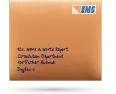
Your order is carefully packed and is dispatched within 24 hours. Here is what a typical package looks like.
Sized like a regular personal letter (approximately 24x11x0.7 cm), with no indication of what is inside.


| Delivery Method | Estimated delivery |
|---|---|
| Express Free for orders over £224.31 | Estimated delivery to the UK: 4-7 days |
| Standard Free for orders over £149.54 | Estimated delivery to the UK: 14-21 days |











| Country | Brand Names |
|---|---|
| United Kingdom | Daktarin Gold Nizoral |
Ketoconazole cream 2% is a non-steroid antifungal medicine. It is used to treat certain fungal and yeast skin infections by killing the fungus or yeast or stopping it from growing. In the UK, it may be recommended or prescribed in dermatology or general practice for suitable superficial fungal skin infections.
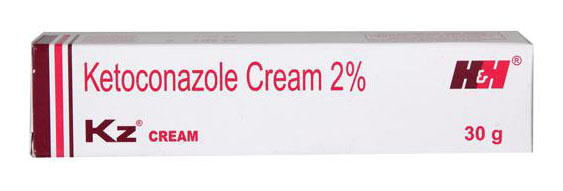
Ketoconazole cream 2% is used on the skin for:
Sometimes, yes. Ketoconazole cream may be applied to the face only if the affected area is on the face (for example, seborrhoeic dermatitis or a fungal infection diagnosed by a clinician). Apply a thin layer and keep it away from the eyes, lips and inside the nose. If it causes severe burning, swelling or a rash, stop using it and contact a clinician.
No. Ketoconazole cream is an antifungal medicine, not a corticosteroid. It does not work like steroid creams used to calm inflammation in conditions such as eczema or psoriasis.
If you have been using a steroid cream, ointment or lotion on the same area (for example, betamethasone or hydrocortisone), ask your doctor or pharmacist how to stop it and when to start ketoconazole cream. Do not change your steroid treatment on your own if you are unsure.
Wash and dry the affected skin. Apply a thin layer to the affected area and the skin just around it, then rub in gently. Wash your hands after applying it, unless you are treating your hands.
If there is no improvement after the recommended treatment period, the diagnosis should be reviewed by a clinician.
| Condition | Used to treat with ketoconazole cream 2%? | Notes |
|---|---|---|
| Ringworm (tinea corporis) | Yes | On-label skin use. |
| Tinea versicolor | Yes | On-label skin use. |
| Yeast infection (skin / cutaneous candidiasis) | Yes | On-label for yeast infection of the skin. Not for vaginal thrush. |
| Seborrhoeic dermatitis | Yes | Often affects the scalp and face; use as directed and avoid the eyes. |
| Spots (acne vulgaris) | - | Not used for typical acne. If the bumps are due to yeast (Malassezia) folliculitis, antifungals may be used under clinician guidance (off-label). |
| Rosacea | - | Not a standard treatment for rosacea. |
| Eczema | - | In the UK, this is not a standard treatment for eczema (eczema is usually inflammatory, not fungal). |
| Psoriasis | - | Not a standard treatment for psoriasis. |
| Hair loss | - | Not used to treat hair loss. If scalp symptoms are due to seborrhoeic dermatitis, treating the rash may help with discomfort and flaking, but it is not a treatment for hair loss. |
Most side effects happen where the cream is applied. Stop using it and seek medical advice if you develop signs of an allergic reaction.
Store at 20°C to 25°C (68°F to 77°F). Keep out of the reach of children.
Ketoconazole cream 2% contains 20 mg of ketoconazole per 1 g of cream (2% w/w). Inactive ingredients vary by manufacturer.
Important: Some formulations contain sodium sulfite, which can cause allergic-type reactions (including severe reactions) in susceptible people, especially those with asthma.

I'm in Derby. Can I enter my postcode before paying to check whether ketoconazole cream can be delivered to my address?
Yes. Enter your Derby postcode at checkout to see the delivery options available for your address before you complete the order.
My order to Reading has been marked as dispatched. Does that mean it will arrive tomorrow?
Not necessarily. Dispatch means the order has left for delivery; arrival depends on the delivery service selected. Express delivery is usually 4-7 days and Standard delivery is usually 14-21 days.
I live in Belfast. Can I confirm before payment whether this cream can be delivered to Northern Ireland?
Yes. Please enter your Belfast address and postcode at checkout to view the delivery options available for that destination before placing the order.
Will my ketoconazole cream definitely come in sealed manufacturer packaging?
The exact packaging and seal arrangement cannot be guaranteed in advance. When it arrives, check the tube, outer pack and any tamper protection; do not use the cream if the packaging appears compromised.
I have type 2 diabetes and a fungal-looking rash on my foot. Does ketoconazole cream affect blood sugar or my diabetes medicines?
Topical ketoconazole cream has negligible systemic absorption and is not known to affect blood glucose or interact with diabetes treatment. Because foot skin problems can need closer assessment in people with diabetes, have a persistent, spreading, painful or broken-skin rash checked rather than treating it as a routine fungal infection.
| Active ingredient | Ketoconazole |
|---|---|
| Drug class | Imidazole antifungal |
| Dosage form | Cream |
| Available strengths | 2% |
| Route | Topical |
| Storage | Store at 20°C to 25°C. |
| ATC code | D01AC08 |
This product has 8 ratings, but only 5 written reviews so far. Share your experience and help other customers.
Ordering was nice and easy.
I'd order again.
Order arrived as expected.
Very pleased with the product.
I asked about available package quantities, and support replied clearly.


